The War on Stupid People

In The Atlantic

AtlStupid

American society increasingly mistakes intelligence for human worth

From my article in the July/August 2016 issue of The Atlantic

As recently as the 1950s, possessing only middling intelligence was not likely to severely limit your life’s trajectory. IQ wasn’t a big factor in whom you married, where you lived, or what others thought of you. The qualifications for a good job, whether on an assembly line or behind a desk, mostly revolved around integrity, work ethic, and a knack for getting along—bosses didn’t routinely expect college degrees, much less ask to see SAT scores. As one account of the era put it, hiring decisions were “based on a candidate having a critical skill or two and on soft factors such as eagerness, appearance, family background, and physical characteristics.”

The 2010s, in contrast, are a terrible time to not be brainy. Those who consider themselves bright openly mock others for being less so. Even in this age of rampant concern over microaggressions and victimization, we maintain open season on the nonsmart. People who’d swerve off a cliff rather than use a pejorative for race, religion, physical appearance, or disability are all too happy to drop the s‑bomb: Indeed, degrading others for being “stupid” has become nearly automatic in all forms of disagreement. Read more

Tagged

Basic Income: A Sellout of the American Dream?

TrBasicIncome

Schemes for giving everyone a guaranteed income are gaining momentum in Silicon Valley and throughout Western Europe. It’s a great idea, until you look closely.

From my article in the June 2016 issue of MIT Technology Review

Matt Krisiloff is in a small, glass-walled conference room off the lobby of Y Combinator’s office in San Francisco’s South of Market neighborhood, shouting distance from some of the country’s wealthiest startups, many of which Y Combinator has nurtured and helped fund. Krisiloff, who manages the operations of the tech incubator’s program for very early-stage companies, is explaining why it is committed to investing an amount said to be in the tens of millions of dollars in a venture that is guaranteed never to make a penny.

It’s the simplest business model conceivable: hand thousands of dollars over to individuals in return for nothing, no strings attached. Krisiloff insists he and his Y Combinator colleagues can’t wait to get started giving away the money. “This could be really transformative,” he says. “It may help change how humans, society, and technology all operate together in the future.”

Proponents say a “basic income” is a way to liberate those who have struggled to find acceptable work: currently 7.4 million people are unemployed in the United States, another six million want full-time work but can only find part-time jobs, millions more have given up looking, and perhaps tens of millions have settled for jobs with low wages, skimpy benefits, or poor working conditions. But it can also be argued that the idea is a way of buying these people off, making it easier to avoid developing the education and training programs that would actually help alleviate income inequality and reverse wage stagnation. Could it just be a way to give up on providing the wide access to decent jobs that has long been considered an essential element of a healthy society? Or, to put it more bluntly: at a time when the tech economy is generating huge amounts of wealth, is Silicon Valley just attempting to appease those left behind? Read more

Improving Public Perception of Behavior Analysis

In a journal article, I explore why the field that does the best job at helping people change problematic behaviors is slighted by the media

From my article in the May 2016 issue of The Behavior Analyst

The potential impact of behavior analysis is limited by the public’s dim awareness of the field. The mass media rarely cover behavior analysis, other than to echo inaccurate negative stereotypes about control and punishment. The media instead play up AbaJournalCoverGenericappealing but less-evidence-based approaches to problems, a key example being the touting of dubious diets over behavioral approaches to losing excess weight. These sorts of claims distort or skirt scientific evidence, undercutting the fidelity of behavior analysis to scientific rigor. Strategies for better connecting behavior analysis with the public might include reframing the field’s techniques and principles in friendlier, more resonant form; pushing direct outcome comparisons between behavior analysis and its rivals in simple terms; and playing up the “warm and fuzzy” side of behavior analysis. Read more (paywalled)

Inside NASA’s New $18-Billion Deep-Space Rocket

Is NASA’s Space Launch System a flying piece of congressional pork or our best shot at getting humans to deep space?

From my article in the June 2015 issue of Scientific American

Deep inside a giant but little-known NASA facility, crews have for years been staging elaborately faked space missions. This is not a conspiracy theory. It is the sad tale of NASA’s Michoud Assembly Facility, the sprawling New Orleans complex where the space agency had for decades built its biggest rockets.

NasaSciamPicAfter the Space Shuttle’s last flight in 2011, Michoud’s massive hangar-like facilities were rented out to Hollywood studios, housing some of the production for Ender’s Game and other sci-fi movies. But lately a growing cadre of NASA engineers and other workers have been engaged on an important new production here—a sequel to NASA’s greatest days of human spaceflight. Michoud is back in the rocket-making business, serving as a factory for the biggest, most ambitious space vehicle ever to undergo construction: The Space Launch System, often called by its acronym, SLS.


The SLS is the rocket in which NASA hopes to thunder a crew of astronauts skyward from Cape Canaveral for roughly a year’s journey to the surface of Mars, while hauling the living quarters, vehicles and supplies they’ll need to spend at least a few weeks shuffling through the rusty dust there. That mission is still about 25 years away. But between now and then, SLS could carry people to the moon and an asteroid, and send a probe to search for life on one of Jupiter’s moons. It is an interplanetarily groundbreaking project, one of the most audacious NASA has ever undertaken.

Why, then, do so many people seem to hate it?  Read more (paywalled)

How Do You Sell a Product When You Can’t Really Say What It Does?

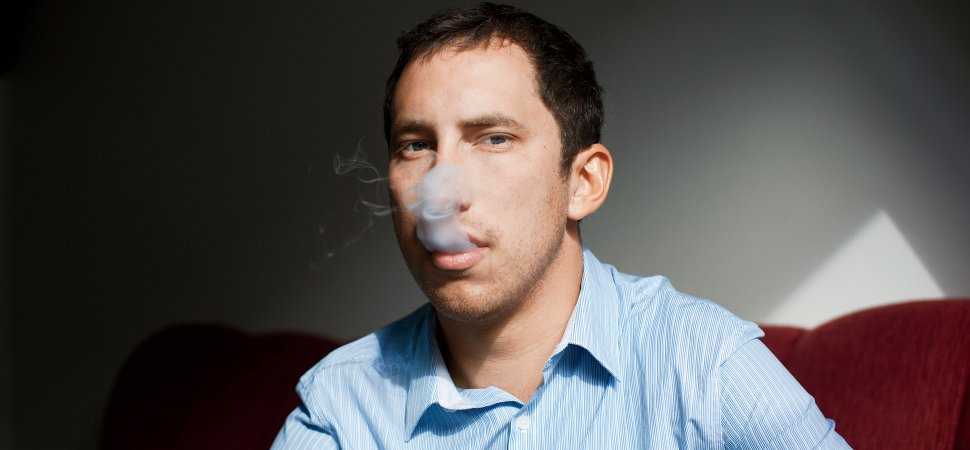
San Francisco startup Ploom has a high-tech spin on smoking tobacco (and certain other plants). It also has a huge marketing challenge.

From my article in the May, 2014, issue of Inc. Magazine

There are two big factors that favor Ploom’s James Monsees and his co-founder Adam Bowen in their quest to make tobacco cool again. One is that their devices let users pull from tobacco most of the nicotine and flavor of cigarettes in the form of vapor, without taking in the cigarette smoke–thus removing many of the health risks, according to some experts. And, as a major bonus, one of their devices has become the darling of the pot-smoking wojames-monsees-ploomrld, which is steadily converting to vapor even as that world swells with growing legitimacy.

But two big factors are also working against Ploom. One is predictable: fierce competition that’s likely to stiffen as both startups and tobacco giants invade the “e-cigarette” market–already worth nearly $2 billion a year and growing fast. The other is a bit less typical in the business world: Ploom can’t market on its strengths. That’s because making health claims and wooing drug users cause all sorts of problems for a company that’s trying to remain squeaky clean in the face of widespread disdain for, and the threat of regulation of, anything linked to tobacco.

That leaves Ploom with a burning problem: How do you expand a company when you can’t really talk about what your products are good for? Read more

America Is Burning: The Fight Against Wildfires

Wildfire2

Years of climate change, drought, and reckless development have transformed nearly all of the American West into a giant tinderbox. Is there anything we can do to keep from going up in flames?

From my article in the Aug, 2014, issue of Men’s Journal

Traffic jams are a fact of life in Southern California. But few motorists have seen the likes of the one that stranded thousands of vehicles in May on Interstate 5 near San Marcos, about 35 miles north of San Diego. As vehicles idled, walls of flame arcing as high as 50 feet, and whipped by winds of up to 70 miles per hour, raced along an adjacent hillside, ripping through acres of parched trees and shrubs and blotting out the sky with roiling, glowing, thick smoke. And that wasn’t the only out-of-control blaze raging: At one point, San Diego County firefighters were grappling with nine separate wildfires – and six of those blazes were winning.

….Big, out-of-season fires are starting to look like the new normal. For as long back as there are records, California’s wildfire season hasn’t truly gotten under way until fall. But through most of 2013 and 2014, wildfires have been raging almost constantly, essentially leaving the state with a 12-month wildfire season.

And it’s not just California. In May, Arizona, Oklahoma, and even Alaska all were hit by large wildfires, months ahead of schedule. More blazes are occurring in fall and winter, as well. “In November, a fire in the Colorado Rockies burned across a snow-covered forest while firefighters watched, astounded,” says Char Miller, a professor of environmental analysis at Pomona College, in Claremont, California, who studies wildfire. “That may be something no one has ever seen before.” Read more

The startups saving health care

3-mhealth_33254Obamacare is fueling a hot new industry that uses mobile technology to curb health care spending. Smart startups are already cashing in.

From my article in Inc. Magazine 

Three years ago, Sterling Lanier, a serial entrepreneur then running a successful market research firm, got a phone call from a medical researcher he knew at the University of California, San Francisco. The researcher wanted him to help with a pro bono project that involved gathering data on thousands of breast-cancer patients. The trick would be to find a good way to get patients to fill out tedious forms.

Nice guy that he is, Lanier agreed. The result, designed with a tech whiz named Boris Glants, was an iPad app that the two named Tonic. Tonic made it easy–almost fun–for patients to provide information about themselves and their health. Mission accomplished.

And that might have been that, except a few months later, Lanier got another call, this one from Georgetown University Medical Center in Washington, D.C. It turned out the UCSF researcher had shown off Tonic at a health care conference and stirred up some interest. It wasn’t long before Lanier…read more.

Can processed food be healthy?

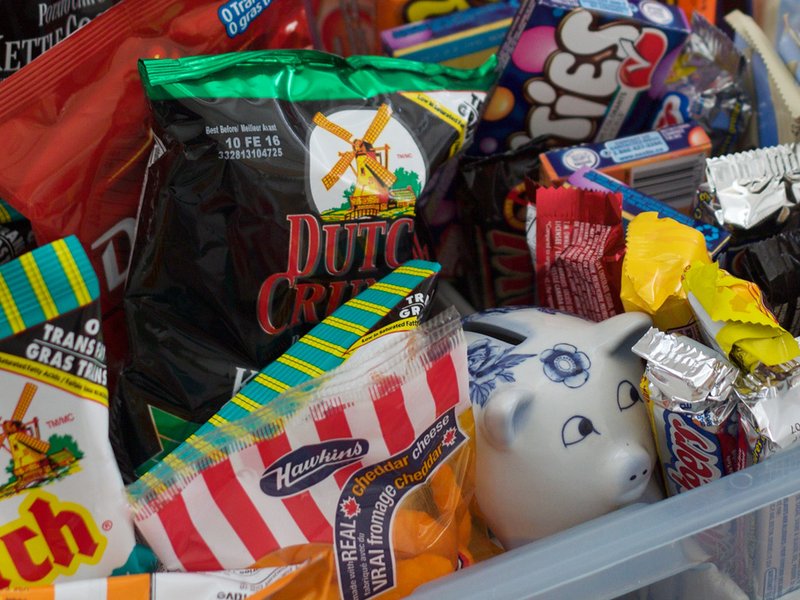
APMACNCHEESE1000-500x333Burger King makes a low-cal French fry. Processed food wants to compete on the health front. Can it?  Fake meat. Super soy. We’ll look.

From my September 2013 interview with NPR’s On Point 

We all know the mantra of healthy eating these days.  Lots of vegetables and fruit on the plate.  Not much meat.  Organic if you can.  And local is lovely.  We like to picture that armful of dinner ingredients fresh from the farmers market.

But what about all the people who don’t get close to that.  And maybe can’t afford it.  There’s a new buzz around processed food that’s being made and pitched as healthy.  Burger King’s low-cal fries.  Fake meat.  Seaweed chips.  Factory-engineered health goop.

This hour, On Point:  could processed food be re-engineered to save our health?  Or is that dreaming?…listen here (beginning at 15:20).

Foodie Heretic: Tackling the obesity health epidemic with -wait for it- fast food

From my interview with The Monthly TheMonthly-sub-too-much

For sure, an overreliance on fast food can lead to the fat farm, but what if it were less salty, fatty, sugary, and came in smaller portions? Science journalist David H. Freedman put forth this radical notion recently in his Atlantic cover story, “The Cure for Obesity.” Freedman argues that since fast (and processed) foods are what many of the mostly poor and obese can afford and prefer, it should be made healthier. Bring on the McDonald’s Egg White Delight. Of course, this challenges the conventional food wisdom espoused by Cal journalism professor Michael “The Omnivore’s Dilemma” Pollan, whom Freedman boldly calls out. Pollan and his followers, “Pollanites” as Freedman calls them, believe that no one should ever…read more.

FORGET THE VEGETABLES–JUNK FOOD COULD HELP FIGHT OBESITY

junk-food-large.jpg__800x600_q85_crop

Journalist David Freedman says engineering healthier versions of popular treats could finally help the poorest and most obese Americans lose weight.

From my December 2013 interview with smithsonianmag.com 

The 2004 release of Super Size Me—a documentary about Morgan Spurlock’s 24-pound weight gain and health decline during a month-long McDonald’s binge—and other books and exposés of the last decade, for that matter, have tarnished the reputation of fast food and other processed foods.

But what if the food Spurlock ate at the chain was healthier? What if, by eating food engineered to be lower-calorie, lower-fat versions of popular favorites, he lost weight in the course of 30 days rather than gain it?

Journalist David Freedman made this case—that fast food and processed food may actually help in the fight against obesity instead of hindering it—in an article this summer in The Atlantic. At a time when the loudest and clearest food message is to eat fresh, locally grown, organic foods, the piece prompted a range of reactions from scientists and fellow journalists in the food and health worlds…read more

The Truth about Genetically Modified Food

cover_2013-09

Proponents of genetically modified crops say the technology is the only way to feed a warming, increasingly populous world. Critics say we tamper with nature at our peril. Who is right?

From my article in the September 2013 issue of Scientific American 

Robert Goldberg sags into his desk chair and gestures at the air. “Frankenstein monsters, things crawling out of the lab,” he says. “This the most depressing thing I’ve ever dealt with.”

Goldberg, a plant molecular biologist at the University of California, Los Angeles, is not battling psychosis. He is expressing despair at the relentless need to confront what he sees as bogus fears over the health risks of genetically modified (GM) crops. Particularly frustrating to him, he says, is that this debate should have ended…read more.

Responses to Atlantic Junk Food Article

Here are several articles that have been written in response to my recent article in The Atlantic. They are, not surprisingly, highly critical of it. (There isn’t much point in writing a whole article to explain how you agree with another article.)

Salon_website_logoSalon: The Atlantic’s latest silly idea is wrong: No, fast food won’t cure obesity by Deena Shanker
Written by a True Believer of the wholesome foodie movement. Big Food is evil and must die! Just tell the poor obese to eat farm-fresh vegetables and they’ll drop their Big Macs and buy everything at farm stands, and everyone will be healthy!

GristGrist: No, fast food isn’t good for you: In defense of Pollanites by Nathaniel Johnson
Written by a smart guy, but unfortunately he focuses in one small, relatively unimportant part of my argument and treats it like it’s my whole piece. See my comment under the article and his response.

mj logo.inddMother Jones: Why the Atlantic’s Defense of Junk Food Fails by Tom Philpott

It was really sad to see this piece. If any publication should have empathy for the plight of the unhealthy poor, you’d think it would be Mother Jones. But no, this was just a dopey, rote screed by an Atkinite, that small but incredibly loud cult of ultra-low-carbers who have become the LaRouchians of the dietary world. Calories don’t matter! Exercise doesn’t help! Eat all the fatty foods you want! It’s all about the carbs! The Atkinites like to claim that everyone else is stuck in the “low-fat craze” of the 1980s. They don’t like to mention that the low-carb craze dates to the 1860s. For the record: It’s best to trim both carbs and fat. Ask your doctor, or any obesity expert.

imagesUS News & World Report: The Myth of Healthy Processed Food by Melanie Warner
I would have expected this piece to be the least sympathetic to my argument, because it’s written by Melanie Warner, whom I call out in my article as one of the more prominent anti-processed-food voices. But this was probably the fairest and smartest of the pieces, in that it at least acknowledged some of the points I make about the ways the wholesome food movement leaves out the poor obese. (But it was still very critical.)

Forbes_LogoForbes: Food And Racism: No Not Paula Dean, At “The Atlantic” by Todd Essig
I’m a racist, because I suggest poor people are particularly hard hit by obesity. (You can’t make this stuff up.)

Forbes_LogoForbes: Why Junk Food Can’t End Obesity: The “Milkshake Study” vs. “The Atlantic” by Todd Essig
I don’t even know what this odd piece is claiming, but it seems pretty critical. Are any editors awake over there at Forbes?

Junk Food Cure?

Click here to watch my interview on CBS This Morning with Charlie Rose, Gayle King and Norah O’Donnell. 

To read my article in The Atlantic entitled “How Junk Food Can End Obesity,” click here.

Screen Shot 2013-07-03 at 10.10.13 AM

You can also watch my web-only interviews by clicking on the links below:

Food fight? Writer takes on whole foods movement (2:10)

Can junk food giants turn the tide on obesity? (1:03)

Screen Shot 2013-07-02 at 8.57.21 PM

Junk food diet: eating healthy at the drive-thru

Click here to watch my June 21st appearance on MSNBC’s The Cycle.

To read my article in The Atlantic entitled “How Junk Food Can End Obesity,” click here.

Screen Shot 2013-06-24 at 2.37.41 PM

Click here to watch my July 4th appearance on Canada’s CTV “AM” morning news show.

Screen Shot 2013-07-04 at 12.48.50 PM

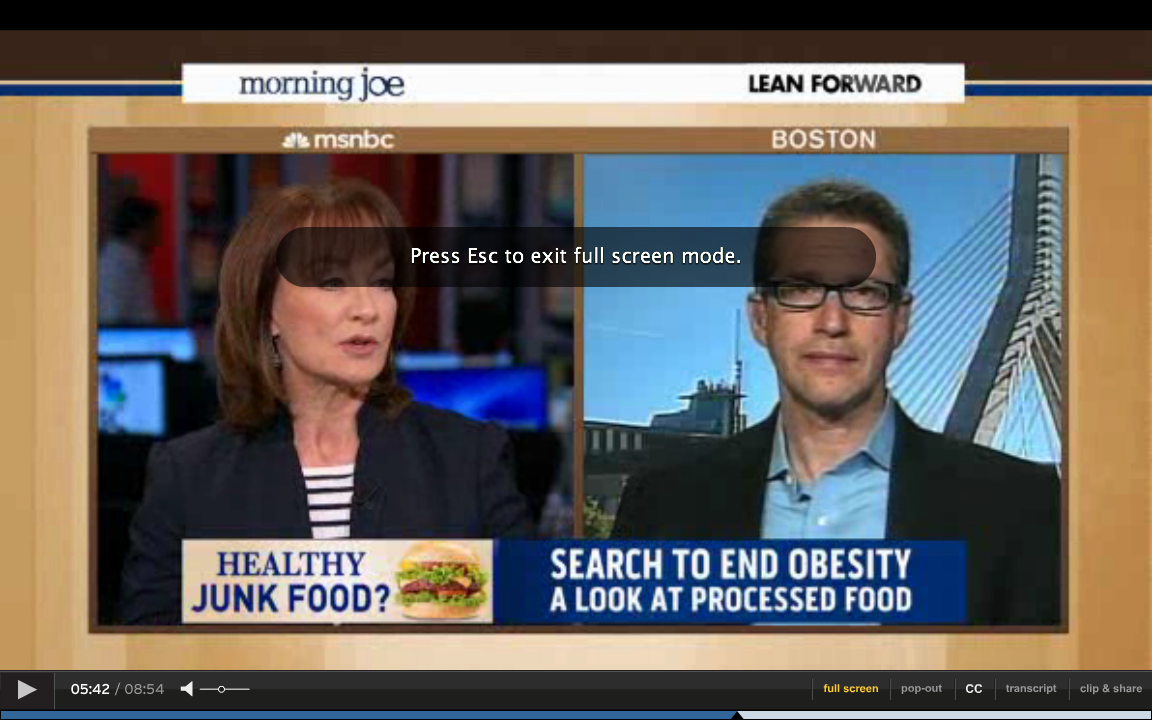
Searching an end to obesity: a look at processed foods

Click here to watch my June 21st appearance on MSNBC’s Morning Joe (segment begins 3:25).

To read my article in The Atlantic entitled “How Junk Food Can End Obesity,” click here.

Screen Shot 2013-06-24 at 6.45.11 PM

How Junk Food Can End Obesity

mag-issue-large

Demonizing processed food may be dooming many to obesity and disease. Could embracing the drive-thru make us all healthier?

From my cover story in the July/August issue of The Atlantic 

Late last year, in a small health-food eatery called Cafe Sprouts in Oberlin, Ohio, I had what may well have been the most wholesome beverage of my life. The friendly server patiently guided me to an apple-blueberry-kale-carrot smoothie-juice combination, which she spent the next several minutes preparing, mostly by shepherding farm-fresh produce into machinery. The result was tasty, but at 300 calories (by my rough calculation) in a 16-ounce cup, it was more than my diet could regularly absorb without consequences, nor was I about to make a habit of $9 shakes, healthy or not.

Inspired by the experience nonetheless, I tried again two months later at L.A.’s Real Food Daily, a popular vegan restaurant near Hollywood. I was initially wary of a low-calorie juice made almost entirely from green vegetables, but the server assured me it was a popular treat. I like to brag that I can eat anything, and I scarf down all sorts of raw vegetables like candy, but I could stomach only about a third…read more.

Tagged

Warped Sense of Time Heightens Temptations

ImageImpulsivity arises from a tendency to want small imminent rewards more than big future benefits. How can we correct our skewed values to care for our future selves?

From my article in Scientific American

(Preview only, full article requires subscription or payment) 

Walk into any fast-food restaurant, and you can watch a small crowd of ordinary people doing something that is utterly irrational: eating junky, excess-weight-inviting food likely to leave them feeling bad about their bodies and open to a host of serious ills. We literally line up to trade our health and self-image for a few minutes of pleasant mouth feel and belly comfort—because the latter is right here, right now, whereas the former is months, years and decades away…read more.

Innovative Rebel: High-Tech Camera Maker Jim Jannard

After founding Oakley–and selling it for $2.1 billion–Jim Jannard is taking on the film industry with Red, his high-tech-camera company. But playing the innovative rebel can work against you, especially in Hollywood.

From my recent article in Inc. Magazine

Image

One day in 2005, video-software engineer and entrepreneur Ted Schilowitz’s cell phone rang. “Ted? It’s me, Jim,” said the caller. “Let’s do it.”

“Uh … do what?” Schilowitz recognized the caller as Jim Jannard, the man who had founded sunglasses powerhouse Oakley and sold it for billions, and who had consulted with Schilowitz a few months before about a project that had led to a dead end.

“That thing we talked about. The camera. Remember?”

Yes, he remembered. Jannard, a camera nut, had persuaded him to look into what it would take to build a digital video camera whose output would look as good as film–and be much smaller and cheaper than a film camera to boot. Such a camera would represent an enormous leap beyond existing digital video cameras, whose relatively murky images limited their use by Hollywood pros.

Schilowitz, an expert in the workings of video technology, had investigated, and he had come back to Jannard with the bad news: Though every element of this hypothetical camera, from the body to the software, would be tough to develop, the sensor–the light-sensitive chip that replaces film in capturing an image–was a doozy. No existing image sensor on earth could match movie film…read more.

Survival of the wrongest

januaryfebruary2013cover_300x400How personal-health journalism ignores the fundamental pitfalls baked into all scientific research and serves up a daily diet of unreliable information.

From my cover story in the January/February issue of the Columbia Journalism Review

In late 2011, in a nearly 6,000-word article in The New York Times Magazine, health writer Tara Parker-Pope laid out the scientific evidence that maintaining weight loss is a nearly impossible task—something that, in the words of one obesity scientist she quotes, only “rare individuals” can accomplish. Parker-Pope cites a number of studies that reveal the various biological mechanisms that align against people who’ve lost weight, ensuring that the weight comes back. These findings, she notes, produce a consistent and compelling picture by “adding to a growing body of evidence that challenges conventional thinking about obesity, weight loss, and willpower. For years, the advice to the overweight and obese has been that we simply need to eat less and exercise more. While there is truth to this guidance, it fails to take into account that the human body continues to fight against weight loss long after dieting has stopped. This translates into…read more.

Tagged

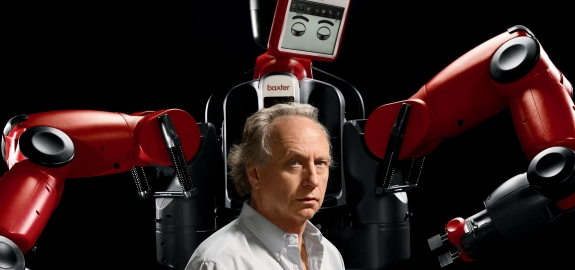
The Rise of the Robotic Work Force

ImageFamed roboticist Rodney Brooks is back with a breakthrough invention that could revitalize American manufacturing and automate millions of jobs.

From my article in Inc. Magazine

Two years ago, Scott Eckert, while on vacation in the south of France, gathered his family around his laptop. The month before, he had accepted a job as CEO of a secretive start-up that was developing an industrial robot, and now he was about to see a video of the first demo of the machine.

He and his two children watched silently as the robot, which turned out to be no more than a small, cranelike arm, shakily grabbed and lifted a plastic disk. The video ended. His 6-year-old son broke the silence. “Dad, is that it?” he said. Eckert wondered the same.

Everything about the company Eckert would soon be running had been a bit mysterious. When the headhunter contacted him months before, he wouldn’t tell Eckert much except that the company had been founded by famed scientist Rodney Brooks, who, until a few years earlier, had led…read more.


Innovation: Mining on the Moon

Image

Check out this solar-powered rover designed to prospect for ice on the moon.

From my article for the Big Ideas Special Report in Inc. Magazine

In the past three years, NASA satellites have discovered evidence of ice on the poles of the moon. That’s a huge boon for future space missions, because lunar ice could be a source of water, oxygen, and fuel. Pittsburgh-based Astrobotic Technology recently unveiled a prototype of a solar-powered lunar rover, Polaris, designed to locate ice on the north pole of the moon and extract samples for analysis. The 300-pound vehicleis made of light, tough composite materials and can accommodate a drill and science instruments weighing up to 176 pounds. William (“Red”) Whittaker, director of the Field Robotics Center at Carnegie Mellon University, founded Astrobotic in 2008. Since then, the company has received $3.6 million in contracts from NASA; it is a front-runner for the Google Lunar X Prize, which will be awarded to the first team to land a privately developed robot on the moon. Astrobotic plans to send Polaris to the moon in October 2015 using a SpaceX Falcon 9 rocket, the same rocketused to complete a recent cargo run to the International Space Station…read more.

Rise of the (Friendly) Drones

ImageUnmanned aerial vehicles like the Predator have been a hit for the military. Just wait 
until ordinary folks get their hands on them.

From my Impatient Futurist column in the October issue of Discover Magazine

The Predator unmanned aerial vehicle, or UAV, has proven a formidable weapon for the U.S. military, quietly lurking in the sky and then zipping in to loose a missile on enemy targets. Its effectiveness raises an important question: When will I have a robotic plane of my own buzzing about that I might summon down to teach a lesson to some of the many deeply annoying people who cross my path? A mild Taser zap or even just a spitball would be fine.

I’m very likely out of luck on this score, due to the bizarre fact that neither Taser zaps nor spitballs share the constitutional protection afforded bullets. So I’ll just have to find other ways to make use of the tiny airborne drone that will almost certainly be at my beck and call in the not-too-distant future…read more.

House Calls for the 21st Century: Carrying a Doctor in Your Pocket

impatientHome diagnosis kits will soon let you give yourself a checkup whenever and wherever you want.

From my Impatient Futurist column in the September issue of Discover Magazine

I don’t know why people complain about going to the doctor for checkups. I’d go every week if I could. It’s not just for the sociability of exchanging interesting new microbes in the waiting room, or the pride in hearing my doctor mutter with approval when I hand her the 58-page printout of all the illnesses I’ve self-diagnosed based on what I’ve read on the Internet. Rather, it’s because I know that a lot of creepy things can happen in my body in a whole year.

Since my health insurance plan inexplicably won’t pay for weekly checkups, I’m faced with long, distressing gaps between visits. As with so many annoyances, this one got me wondering…read more.

CAN FACEBOOK-STYLE ELECTIONS PRODUCE CANDIDATES WE ACTUALLY “LIKE?”

ImageIn the coming decade, 
online primaries and elections might loosen 
America’s gridlock politics.


From my Impatient Futurist column in the September issue of Discover Magazine

Feuding between Democratic and Republican leaders has rendered the U.S. government nearly dysfunctional, with the summer 2011 deficit standoff only the most egregious recent example of gridlock run amok. As growing numbers of Americans say they are fed up with both parties, the door would seem open for an alternative. Historically, third parties have failed miserably: Ross Perot, the most successful independent presidential candidate in modern times, did not win a single state 
in 1992. Technology is changing the electoral rules, though, inspiring reformers to envision a new and more open brand of politics, one built around online voting and Facebook-style campaigns.

For a brief, shining moment last spring, it seemed as if that revolutionary concept might take hold in the United States. Americans Elect, founded and initially bankrolled by billionaire venture capitalist Peter Ackerman, launched plans to create a virtual third party via…read more.

HIGH-TECH SOAPS MIGHT JUST CLEAN UP THE PLANET

soap

The worst industrial spills call for something stronger than the old-fashioned bar sitting in your soap dish.

From my Impatient Futurist column in the June issue of Discover Magazine

Between freak arctic melting, Japanese nuclear melting, and antibiotic resistance popping up everywhere, I can’t help but see the world as tiptoeing into pre-apocalypse. If there is some sort of crapstorm coming and I’m lucky enough to survive it, there’s one thing I know for sure: I’m going to need a really good hand-cleaner for the aftermath. When I come in from a hard day of zombie hunting, it won’t be just dirt that I’ll need to get out from under my fingernails.

Actually, I could use that doomsday soap now—or rather, we all could. That’s because most of the human race has no intention of patiently waiting for an unspecified apocalypse and has already gotten a head start on mass despoiling. So far the tides of toxic waste and exploded-oil-rig crude haven’t made it as far as my sleepy burb. But right now somebody somewhere is facing a mess that Softsoap…read more.

YOUR DOMESTIC ROBOT SERVANT HAS ARRIVED (IN A FASHION)

humanoid

All you need is $400,000 and the patience of Job.

From my Impatient Futurist column in the May issue of Discover Magazine

Like many people with limited social skills, I’ve always wanted a robot. And I’ve never been the least put off by the strict movie rule that having a robot can only result in its owner being pushed down the stairs, sucked into the vacuum of outer space, or enslaved with what’s left of humanity. I’m well aware that movie rules are hardly ever wrong, but it hasn’t been fear of betrayal that’s kept me from having a robot helper. It’s been the lack of their existence, in spite of a century of big talk. And this has left me not only without the sort of non–emotion-experiencing companion who could really understand me but also with a lot more laundry, cooking, dirty dishes, and child care than a technophilic citizen of the 21st century should have to put up with.

Useful home robots have always been about 20 years in the future, according to experts—a discouraging estimate, since the same experts assure me every other exciting technology under development is only 5 years away. Yes, I know, you can drive over to Walmart and pick up a carpet-vacuuming “robot” to keep your lawn-mowing “robot” company. While you’re there, why don’t you also grab a “house” in the camping department? I’ve got no interest in keeping company with hundreds of dumb, whirring little things. Scampering scrubbers and pot-stirrers are way too small and stupid to push me down the stairs when I’m not looking. read more.

Warped Sense of Time Heightens Temptations

ImageImpulsivity arises from a tendency to want small imminent rewards more than big future benefits. How can we correct our skewed values to care for our future selves?

From my article in Scientific American

(Preview only, full article requires subscription or payment) 

Walk into any fast-food restaurant, and you can watch a small crowd of ordinary people doing something that is utterly irrational: eating junky, excess-weight-inviting food likely to leave them feeling bad about their bodies and open to a host of serious ills. We literally line up to trade our health and self-image for a few minutes of pleasant mouth feel and belly comfort—because the latter is right here, right now, whereas the former is months, years and decades away…read more.

The Perfected Self

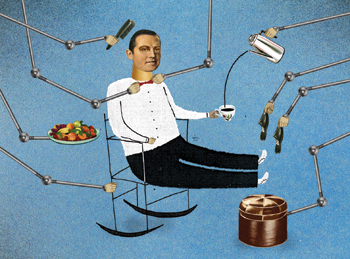
B. F. Skinner’s notorious theory of behavior modification was denounced by critics 50 years ago as a fascist, manipulative vehicle for government control. But Skinner’s ideas are making an unlikely comeback today, powered by smartphone apps that are transforming us into thinner, richer, all-around-better versions of ourselves. The only thing we have to give up? Free will.

From my cover story in the June 2012 issue of The Atlantic


My younger brother Dan gradually put on weight over a decade, reaching 230 pounds two years ago, at the age of 50. Given his 5-foot-6 frame, that put him 45 pounds above the U.S. National Institutes of Health’s threshold of obesity. Accompanying this dubious milestone were a diagnosis of type 2 diabetes and multiple indicators of creeping heart disease, all of which left him on a regimen of drugs aimed at lowering his newly significant risks of becoming seriously ill and of dying at an unnecessarily early age

He’d be in good company: a 2007 study by TheJournal of the American Medical Association found that each year, 160,000 Americans die early for reasons related to obesity, accounting for more than one in 20 deaths. The costs are not just bodily. Other studies have found that a person 70 or more pounds overweight racks up extra lifetime medical costs of as much as $30,000, a figure that varies with race and gender. And we seem to be just warming up: cardiologists who have looked at current childhood obesity rates…read more

Disruption Comes (Finally!) to Commercial Real Estate

How Jason Freedman (no relation) and 42Floors cooked up a killer business idea that could turn commercial real estate on its head.

From my article in the May issue of  Inc. Magazine

Jason Freedman hunches his shoulders against New York City’s December chill and walks faster, nudged both by the cold and by being late. He and David Woodworth, co-founders of an Internet company called 42Floors, both stand out a bit with their buoyant, vulnerable Californianess as they swim against the trudging, elbowing crowds.

Focused on the iPhone he clutches a foot in front of his face for navigational purposes, oblivious to how dorky and unsafe this seems on these streets, Freedman races on to the next stop in a two-day string of meetings, Woodworth trailing a few feet behind.

Freedman and Woodworth are several months into the creation of 42Floors, which aims to… read more

The Kitchen of the Future

An introduction to the visionaries planning tomorrow’s high-tech, ultra-efficient, green, and even mood-altering spaces designed for much more than cooking.

From my article in the April 2012 issue of Gourmet Live

The kitchen of the future has a long past. At world fairs and trade shows going back more than a century, crowds have been tantalized with slick visions of the extraordinary ways we’d be preparing foods in the coming decades. In particular, notes Ruth Oldenziel, a professor of American and European history at the Eindhoven University of Technology in the Netherlands, and coeditor of the book Cold War Kitchen, futuristic kitchens have long been used by marketers to excite us about new technologies. In the 1900s, it was the magic of natural-gas stoves, then in the 1920s and 1930s, the spread of electric and telephone utilities, then refrigeration in the 1940s, on through microwave ovens in the 1950s and even nuclear power in the Atomic Age kitchen (to say nothing of today’s quesadilla presses and single-serving coffeemakers). “In every generation, the kitchen of the future is a sort of passport photo for innovation,” says Oldenziel.

But lost in all the fuss over electromechanical, thermal, and radiative marvels, according to Oldenziel, was much discussion about changes…read more