Coupon Deals and the Search for New Customers

From my article in the Small Business Blog of The New York Times

A few weeks ago I wrote a post about two small businesses that were taking different approaches to employing Groupon-style social-network marketing as a way of drumming up business.

One of them, a restaurant called Acropolis in Needham, Mass., went with Living Social, whose service closely follows the Groupon model — meaning the coupon company sends the offer out to its large database of local consumers, takes a big chunk of the revenue that comes from selling the discount vouchers, and doesn’t share much customer information with the small business that buys the deal.

The other, the Urban Escape Day Spa in Golden, Colo., tried a new service called SaveLocal, which is offered by Constant Contact, a company best known for its e-mail marketing tools. With SaveLocal, there are some important differences…read more

Your Personal Automated Mass Transit Vehicle Is on Its Way

Get out of your car and into your flying train, 
superclean superbus, and most impressive of all, your personal subway.

From my Impatient Futurist column in the the April issue of Discover

Despite my mania for all manner of irresponsible personal vehicles, I’m actually a public-transportation nut. A few of the reasons:
• I can read, check email, send text messages, or catch a few winks while I’m zipping to my destination
• I have built-in motivation for walking, given that I have to get to and from the bus or train stop
• I feel good that my ride isn’t fueled by the conversion of fossilized sea life into impending climate catastrophe
• I get to trade small talk and occasional newspaper sections with fellow transit riders.

But I know you have your very good reasons for being among the 98 percent of the population that shuns public transportation:
• You can read, check email, send text messages, or catch a few winks while you’re swerving into oncoming traffic and pedestrians
• You have built-in motivation for stopping at Wendy’s for celebration takeout, given that you haven’t had to walk more than nine consecutive steps the entire day
• You feel good about the copious burning of hydrocarbons, which is creating valuable new beachfront property
• You get to trade hand gestures and occasional gunfire with fellow traffic jammers.

Ok, go ahead and sneer at my bus through the windshield of your Range Rollover…read more

Good News, Spock—We’re Getting Closer to a Universal Translator

The rapid advancement of Google-style, statistical translation may help realize this long-time dream.

From my Impatient Futurist column in the the March issue of Discover

Those of us for whom Star Trek serves as a benchmark for technological progress can only bemoan the fact that hopes for faster-than-light travel to other galaxies seem to be receding at warp speed, given that we no longer even have faster-than-sound travel to France. But I would prefer to focus on the bright side: We’re rapidly closing in on the Universal Translator, which means that when I do finally arrive in France, I’ll be able to communicate as easily as if I were on Earth.

The Universal Translator, of course, was a handheld device that 
instantly converted Captain Kirk’s futuristically clipped English into the language of whichever vaguely humanoid alien was offering to buy him a blue drink. It is impossible to overemphasize…read more

Evernote: Company of the Year

Evernote is rejecting industry trends, getting customers to pay for something that’s free, and reinventing the way we remember

From my article in the December 2011 issue of Inc. magazine

Phil Libin remembers the moment he left childhood behind. It was nearly four years ago, when the funding for his Internet start-up fell through. He was 35.

   It had all been so much fun until then. But at 3 a.m., out of cash and having waited in vain for a venture capitalist or angel or CEO or anyone at all to return his increasingly desperate calls, Libin knew that he would have to pull the plug on Evernote, a software application that helps people remember things. “I realized I was going to have to wake up tomorrow and lay off everyone in the company,” he says….read more

Science Finds a Better Way to Teach Science

After doing some much-needed research, cognitive scienctists are suggesting a new way to boost students’ lagging scores: Get rid of the hallowed (and stultifying) classroom lecture

From my Impatient Futurist column in the the December 2011 issue of Discover

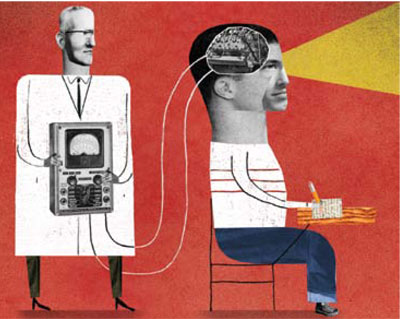
Teaching well is hard. I can cite my direct observations of the hundreds of victims of my occasional efforts over the years as a teacher of physics and writing. As I have stood lecturing brilliantly to a few dozen purportedly eager collegians, it has not escaped my attention that at any one time only three or four seem awake enough to keep up with their text messaging.
   Clearly the problem is not the content or presentation style of my lecturing, which, as I may have neglected to mention, is brilliant, or so I was once assured by a student who stayed after class to ask for a sixth extension on an assignment. Then again, from what I recall of my college days, I wasn’t exactly on the edge of my seat at my professors’ lectures, either. And most of my fellow lecturers don’t report much different. Could the problem be with the nature of lecturing itself?…read more

The Man Who Gave Us Less for More

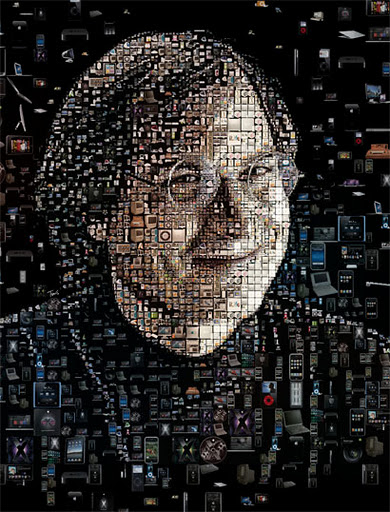
Examining the crushing success of Steve Jobs

From my article in the January 2012 issue of Discover
(#8 of the top 100 science stories of 2011)


I was front row center when Steve Jobs unveiled the Apple Macintosh to the world in 1984 in 
Boston. While the crowd cheered and clapped 
and squealed, I was scratching my head. What did this pretty beige box offer that a hundred other computers didn’t already offer, besides a higher price, much less choice in software, and no 
compatibility with the rest of the world’s devices?…read more

Layer by Layer

With 3-D printing, manufacturers can make existing products more efficiently—and create ones that weren’t possible before

From my article in the January 2012 issue of Technology Review

GE thinks it has a better way to make jet-engine fuel injectors: by printing them. To do it, a laser traces out the shape of the injector’s cross-section on a bed of cobalt-chrome powder, fusing the powder into solid form to build up the injector one ultrathin layer at a time. This promises to be less expensive than traditional manufacturing methods, and it should lead to a lighter part—which is to say a better one.

The innovation is at the forefront of a radical change in manufacturing technology that is especially appealing in advanced applications like aerospace and cars. The 3-D printing techniques won’t just make it more efficient to produce existing parts. They will also make it possible to produce things that weren’t even conceivable before—like parts with complex, scooped-out shapes that minimize weight without sacrificing strength. And the technology could reduce the need to store parts in inventory, because it’s just as easy to print another part—or an improved version of it—10 years after the first one was made. An automobile manufacturer receiving reports of a failure in a seat belt mechanism could have a reconfigured version on its way to dealers within days…read more

In Memoriam: The Space Shuttle

With great ambivalence we note the passing of 
the first and only reusable spaceship, the space shuttle, 
on July 21, 2011. Our prayers are with NASA.

From my article in the January 2012 issue of Discover
(#6 of the top 100 science stories of 2011)

The space shuttle, which long served NASA and humankind as a low-Earth-orbit 18-wheeler, died on July 21 at the NASA Kennedy Space Center in Florida, after gliding to an uneventful touchdown from a routine mission. It was 39 years old. The shuttle program had been suffering for several years from a wasting loss of enthusiasm for its high price tag and untamed risks. The final cause of death was failure to find any reason to keep pouring billions of dollars into an obsolete space ferry that lacked a stirring mission…read more

A Few TV Appearances

I was on John Stossel’s show on Fox in September, discussing why experts often turn out to be wrong. You can watch it by clicking on the “play” icon above, or by going here.

And because of Andy Rooney’s death, I thought I’d repost the CBS segment in which Rooney and I tour his office to discuss the useful role that clutter can play. You can see the clip here.

Why Economic Models Are Always Wrong

A fundamental problem with the mathematics of models ensures we’ll always get unreliable predictions

From my article on the Scientific American Website, posted Oct. 26, 2011 (A companion piece to my feature article on economic models in the Nov. 2011 print edition, posted just below
)

When it comes to assigning blame for the current economic doldrums, the quants who build the complicated financial risk models, and the traders who rely on them, deserve their share of the blame. But what if there were a way to come up with

simpler models that perfectly reflected reality? And what if we had perfect financial data to plug into them?

   Incredibly, even under those utterly unrealizable conditions, we’d still get bad predictions from models.
   The reason is that current methods used to “calibrate” models often render them inaccurate….read more

Study proves it’s not unhealthy to be overweight? Nah.

Researchers at the University of Manitoba have released a study on the relationship between body mass and health problems. Here’s a typical mass-media report on the findings, headlined, “Overweight people don’t have bigger health problems, study finds.”
 
It’s an epidemiological study, which means researchers looked back at a bunch of historical data about people and then tried to draw associations between those people with certain characteristics or behaviors, and how they fared over time. Epidemiological studies are much cheaper and easier and usually quicker to do than almost any other type of study, and they seem impressive because they often involve large numbers of people. But they also are some of the least reliable studies, being typically plagued with just about every problem that a study can have, including confounders (what happens to people in the study may have little or nothing to do with the causes that are being looked at), confusion of cause and effect (what happens to people in the study may actually be causing the factors that are being studied, rather than being caused by them),unrepresentative samples (the people being studied may not be typical of the population we care about), trying to draw conclusions from small differences, and more. Most studies about the relationship between health and weight we hear about are epidemiological studies,and we’ve had ample evidence over time that these are some of the least reliable among generally unreliable epidemiological studies.
But there may be something else to worry about with the conclusions of this Manitoba study, something that makes me wonder if the findings are actually right–but not for the reasons implied in reports of the study. 
Last year I met with Oberlin College biologist Keith Tarvin, who studies foraging behavior in animals. Tarvin explained to me that throughout most of the animal kingdom, animals will generally put on excess weight when provided with plenty of calorie-rich food and not givenany reason to be physically active, such as having to forage or hunt for food, or having to avoid predators. (Animals that need to keep weight down in order to survive are sometimes an exception–birds,for example, can’t fly if they get too heavy.) Situations where animals lose weight, on the other hand, are usually associated with some pathological state or threat–as for example when fish keep weight off in order stay small to be less visible to and appealing to predators, or to slow their maturation in order to preserve fertility and lower energy needs during times of drought, extreme temperatures,food shortages or other environmental pressures.
In other words–and at this point I’m merely expressing a conjecture that came up in my chat with Tarvin—it may be that, weight-related health factors aside, having a stronger appetite is associated with being well-suited to the environment. Or to put it differently,keeping weight off when there is plenty of rich food around and no pressing reason to be physically active is, in a sense, a pathological state. Apply this theory to human society today–and at this point I’m degenerating into my own conjecture–and we might well predict that being overweight is associated with being, in some ways at least, healthier than those who keep weight off.
Does this mean we should stop worrying about being overweight? Absolutely not. To conclude as much would be confusing cause and effect. If this conjecture is right, it means that being overweight is in someways an effect of being healthy; it doesn’t mean that being overweight confers any health benefits. And in fact, the possible rightness of this conjecture should have no bearing whatsoever on the well-established fact that carrying excess fat is generally unhealthy, and that people improve their health and lower their health risks when they lose excess fat.
Even if it’s true that people who are overweight are in many cases healthier in some ways than many people who are not overweight, theselucky overweight would still on average even further improve their health by losing the excess weight, and those who are not overweight would become less healthy by putting on excess weight.That doesn’t mean that weight loss is a pathological state, even though it’s usually associated with one in the animal kingdom. We should understand that the loss of excess weight is a good thing,even if, in a way, it is an unnatural thing in our society of plentiful, overly stimulating, calorie-dense food and sedentary lifestyles. That’s why our goal should be, in effect, to change what’s natural in our society–so that people are pushed by everything they see around them to avoiding excess weight, rather than being pushed to consume rich food and avoid physical activity as they are today.
To have even a decent chance of proving that losing excess weight will make you healthier–or to solidly prove just about any theory about the relationship between excess weight and health–we’d need a randomized controlled trial in which people are randomly assigned to either become fatter than they are, or lose weight, or maintain their weight. That trial is never going to happen, for what I hope are obvious reasons. And this brings us back to the problems with epidemiological studies like the one done in Manitoba. They rarely answer the questions we really want to ask. Instead, they give us answers that only raise more questions. There’s nothing wrong with that–it’s how science operates. We should be grateful scientists are conducting these studies, and appreciate the fact that they add to our knowledge base. But we should also be aware of the extreme limitations and qualifications that attach to the findings.
Inthe case of the Manitoba study, I think it’s fair to say the study at best tells us little about the healthfulness of avoiding being overweight, and at worst is, at least in how it’s being reported,extremely and even dangerously misleading. One of the biggest problems with the obesity crisis is the lack of awareness and motivation on the part of a sizable percentage of overweight people.When a study like this gets press claiming that being overweight seems to be as healthy as not being overweight, we take a big step backwards, and cause real damage that could in principle be measured in the loss of many years of life in the population, not to mention the drop in quality of life experienced on average by the overweight.I wish scientists and journalists would start taking these issues into account in their reports to journals and the mass media.

A Formula for Economic Calamity

Despite the lessons of the 2008 collapse, Wall Street is betting our future on flimsy science

From my article in the November 2011 issue of Scientific American

The market crash of 2008 that plunged the world into the economic recession from which it is still reeling had many causes. One of them was mathematics. Financial investment firms had developed such complex ways of investing their clients’ money that they came to rely on arcane formulas to judge the risks they were taking on. Yet as we learned so painfully three years ago, those formulas, or models, are only pale reflections of the real world, and sometimes they can be woefully misleading….read more

The Best American Science and Nature Writing 2011

[Includes my Atlantic article profiling meta-researcher John Ioannidis]


From the introduction, by Mary Roach:

…Good science writing is medicine. It is a cure for ignorance and fallacy. Good science writing peels away the blinders, generates wonder, brings the open palm to the forehead: Oh! Now I get it! And sometimes it does much more than that…. (See the book.)

Doing Business in China

Michael Lee is on the verge of becoming the first American entrepreneur to build big in the world’s most populous country

From my article in the Oct. 2011 issue of Inc. magazine

Michael Lee is eerily quiet as his world comes down noisily around him. Packed into a cramped conference room in his company’s modest offices in Nanjing, China, Lee’s key managers are at one another’s throats. The more angrily they spit blame at one another for the disastrous, unsalvageable situation the company finds itself in, the more enervated Lee seems to become, until finally he is no more than a slumped statue following the action only with slight movements of his eyes….read more

Why US Green-Tech Firms Are Moving to China

Boston Power’s move reflects China’s willingness to provide incentives for companies in electric vehicles and other strategic industries

From my Sep. 9, 2011, article on the Technology Review Website

Many in the U.S. have an interest in getting clean-tech ventures off the ground. Among them are the government, capital markets, industry, and science labs. But China seems ready to do more on every front to make such projects happen, and to do it right now—without red tape or concern about economic turmoil.
     Leading-edge battery maker Boston Power appears to have come to that conclusion. The company is set to move to China, where the government is helping to cut the firm a $125-million deal that no one else is likely to match. The deal could leave the company poised to be a part of what could be a mushrooming market there in electric vehicles…..read more

The Impact of an Obese Presidential Candidate–Chris Christie?–on the Obesity Crisis

New Jersey Governor Chris Christie continues to insist he won’t seek the Republican nomination for the U.S. presidency, but many suggest he’s likely to reconsider. I normally avoid commenting on any individual’s weight issues, but I feel compelled to make an exception for Christie, who is obese, for two reasons. First, he’s a high-profile public figure who seems to be at least flirting with those who want him to run for president, which in my opinion means he ought to expect to surrender all rights to privacy in virtually all aspects of his life, as have most governors, not to mention potential presidential candidates. Second, the president of the United States is a role model for tens of millions of people, perhaps especially including children. Anything the president does, or anything he or she is, is likely to affect the choices people make about themselves for years to come. And in this the choices relate to a serious crisis in public health.

Let me start off by saying that in no way do I have anything critical or negative to say about Christie with regard to his obesity. Obesity in general has become a major crisis for humankind, and for most individuals it is a disaster at least for health, and likely in other ways. But that doesn’t mean that people who are obese have done anything wrong or inappropriate, or that there is anything deficient in their character or behavior, or that they should be given a hard time. I’d like to see most obese people motivated and encouraged to adopt healthier behaviors, and supported in their efforts to do so, both for their own sake and the sake of all us, since all of society feels the pain of the resulting high health-care costs, lowered productivity, and higher risks of obesity (given that it has been clearly proven that obese people raise the chances that the people around them will be obese, for a variety of reasons). But I’m strongly opposed to obese people being insulted or otherwise being given a hard time over obesity. Christie is no exception, public figure and role model or not. His weight doesn’t in any way affect what I think about him as a person or politician.

However, I think it’s fair and even necessary to speculate on the effect that having an obese president, or even candidate, could have on the public’s battle with obesity. I see two obvious possibilities:

1) It makes the problem of obesity worse by allowing obese people to feel that there must not be much of a problem with obesity, since we have such an admirable public figure who is obese.

2) It would help millions to lose weight by calling more attention to the problems related to obesity and solutions available to fix it.

Which way would it go? I think it would depend on what the obese candidate or president said about obesity. If he or she talked about it openly as a struggle and discussed the benefits of and means for losing weight in a smart way–namely, through behavior change approaches–then I think this person could be the best thing that’s happened to public health in a long time. If he or she refused to speak about it, or, even worse, insisted on explicitly passing obesity off as a non-problem, or made a comfortable joke of it, I think it would be a public health catastrophe.

I think there’s reason to believe Christie would be the more helpful sort of candidate and president with regard to attitudes about obesity. He was one of the first and very few prominent Republicans to speak out in favor of Michelle Obama’s anti-obesity campaign, defending it against widespread Republican criticism. In my opinion that makes for an excellent litmus test on this question. Ms. Obama’s campaign is low-key but brilliant, hitting a real sweet spot in encouraging modest, gradual, comfortable, sustainable behavior change of the sort that could significantly improve the lifetime health of tens of millions of children. Most Republicans who have spoken out on it, meanwhile, have treated it like an evil conspiracy. It took courage and wisdom on Christie’s part to go against that flow.

That Christie himself is obese wouldn’t take away from any support he offers of efforts to do something sane about the public problem. Indeed, his own condition would likely add to the impact of any support he offered, and that would be true whether or not he himself is willing and able to substantially improve his health and health risks by losing some weight or speaking out on his own struggles. Were he to take those additional steps, of course, and become president, he could single-handedly become a hurricane of life-saving change in America.


One thing I can’t make up my mind on is what the effect would likely be if an obese candidate or president advocated a less-sound approach to weight loss. I fear that having a president who proudly announced being on an ultra-low-fat or ultra-low-carb diet, or a fasting diet, or a drug-assisted diet, or who expressed an interest in bariatric surgery, might end up doing more harm than good. These just aren’t safe and effective approaches to weight loss for most people over the long term, and embracing such an approach would lead many people to try them and end up regaining the weight, while distracting them from the behavioral approaches that can actually help over the long term. That potential damage, of course, would have to be weighed against the benefits of having a candidate or president who was at least willing to confront the problem of obesity and advocate taking action.

In any case, I truly hope voters don’t make any candidate’s excess weight a factor in their choices. But if we do elect a president who is obese, I hope he or she can at least on a public level become part of the solution to the obesity crisis, not the problem.


By the way, here’s a video of some of the media coverage of Christie’s weight vis a vis his candidacy:
http://www.newsy.com/embed-video/8585/


The Triumph of New-Age Medicine

Carefully controlled studies have shown alternative medicine to work no better than a placebo. But now many doctors admit that alternative medicine often seems to do a better job of making patients well

From my story in the July/August 2011 issue of The Atlantic

…You might think the weight of the clinical evidence would close the case on alternative medicine, at least in the eyes of mainstream physicians and scientists who aren’t in a position to make a buck on it. Yet many extremely well-credentialed scientists and physicians with no skin in the game take issue with the black-and-white view espoused by Salzberg and other critics. And on balance, the medical community seems to be growing more open to alternative medicine’s possibilities, not less.
   That’s in large part because mainstream medicine itself is failing. “Modern medicine was formed around successes in fighting infectious disease,” says Elizabeth Blackburn, a biologist at the University of California at San Francisco and a Nobel laureate… read more

Angry Responses to My Piece On Alternative Medicine

First of all, my deep apologies for not posting in so long. I’m going to get back to a regular schedule, I promise.

My long article on alternative medicine came out a few days ago in The Atlantic. In a nutshell, I explain why more and more doctors are recognizing that alternative medicine does a better job in some ways with many patients than mainstream medicine does–even though the core physical treatments of alternative medicine seem to rely mostly or entirely on the placebo effect. In particular, I make the case that alternative practitioners tend to invest more time and effort in helping patients adopt healthier lifestyles and attitudes than do mainstream doctors, and these changes are likely to do more for most people’s health and wellness on average than mainstream treatments.

Not surprisingly, several prominent medical-science bloggers have gone ballistic at the suggestion that alternative medicine might have something going for it. Here’s a brief list of links to some of the notable, highly critical responses to the article:

Steven Salzberg’s response
Steven Novella’s response
David Gorski’s response
Matthew Herper’s response

I responded at modest length to each of these posts in the comment sections under the posts (except for Salzberg’s post to the Atlantic, where my response is on a separate page. Salzberg and Novella, both highly respected scientists (and Novella is a physician as well) known to be strongly opposed to alternative medicine, were interviewed by me at length for the article, and their viewpoints were, I think it’s fair to say, well-represented in the article. (Neither has suggested otherwise.) I didn’t interview Gorski, but mentioned him in passing in the piece. Gorski is a physician-scientist who must be among the angriest voices on the planet with regard to alternative medicine–he is the hardest-core of this group of hard-core anti-alternative-medicine warriors–and he went after me some months ago with regard to my Atlantic profile of John Ioannidis, the highly acclaimed physician-researcher who has found so many problems with published medical research. Herper is, I believe, a lowly journalist like myself.

I’d like to make some relatively broad comments about these mostly angry responses to my article. I’ll start off by pointing out that while these folks imply (they of course don’t come out and say so) that they are representing mainstream medicine and indeed all of science and perhaps all of Western thought, they are not. As my article makes clear, mainstream medicine has been slowly moving toward increasing acceptance of alternative medicine. Increasingly, Gorski and other hard-core opponents of alternative medicine are themselves gradually being pushed toward the fringes of medicine. (Gorski concedes as much in his post.) Whereas I found top physician-researchers happy to say good things about alternative medicine wherever I looked, including at some the most prestigious academic medical centers in the world–I wasn’t even able to fit them all into the article–I had to work a bit to line up two highly respected, articulate scientists who were intensely opposed to it so I could fairly present that point of view in the article.

Don’t take my word for it–go out and ask physicians you trust what they think of alternative medicine. Yes, many still object to it, and most have some concerns and hesitations about it (as do I), but I’ve found that most have come to accept to some extent the fact that some of their patients, for whatever reasons, seem to get some real benefits from it, and often with problems that seemed resistant to mainstream medicine. Why would a caring physician, or any scientist, find this fact so hard to take?

Some of the attacks on my article also attempt to paint me as an alternative-medicine “apologist.” But what does that even mean? Am I imagined to attend meetings of my fellow apologists where we come up with our arguments together? Apparently I’m being assigned to some terrible camp for which I’m supposed to be judged, rather than for my actual argument. Are my attackers mainstream-medicine apologists? Do any of us have to stoop to name-calling to make our points? For the record, I’ve never had anything to do with alternative medicine in my entire life until I took on this article, either as a patient or a journalist, and I did my best to come into it with an open mind, and with no skin in the game. If I’m an apologist for this field, I’m an incidental one.

There are two main claims that underlie all the attacks on my article. They are: 1) Because physicians could in principle provide the sort of health-improving attention to patients that alternative practitioners by most accounts are today much more likely to provide, and because it is so difficult to clearly prove that alternative practitioners do in fact do a better job in this regard, it’s wrong to say that alternative medicine offers any advantage in this regard.  And, 2), because alternative medicine incorporates core treatments that don’t actually have the (implausible) direct physical effect claimed, but rather work by the placebo effect, alternative medicine is a fundamentally evil, anti-scientific entity (voodoo!), and therefore one must never suggest there is any aspect of alternative medicine that might be good.

I can only shrug at these notions. You’ll either buy them or you won’t. I don’t, and most physicians don’t, as far as I can tell.

Those two basic arguments underlie Gorski’s particularly rabid rant, too. But if you read it, you’ll quickly find yourself buried in a detailed, apparently point-by-point refutation of virtually everything I say in my article. He goes through the article paragraph by paragraph, sentence by sentence, finding in each the logical flaw, the fallacy, the error of argument. Do I compare A and B? Then I’m a fool because A and B are different! Do I contrast C and D? Then I’m a fool, because it’s a false dichotomy! Do I assert a point about science? What do I know about science, I’m a journalist, and therefore a fool! Do I quote a Nobel Laureate? Then I’m a fool, because I’m arguing from authority! Do I point out a problem with mainstream medicine? Then, fool that I am, I’m setting up a straw man! Do I cite a study? Then I’m a fool, because that study was trash, or I’ve misinterpreted it, or it doesn’t apply here! Do I say that randomized studies, the gold standard of medical science, can’t really settle the question of whether alternative medicine might ultimately do a better job in some ways? Then I’m a fool, because any question can be settled with randomized trials, and in fact the studies have been done!

A brief aside about studies: There are hundreds of thousands of researchers whose careers depend on producing studies, so I’m not exaggerating when I say there is a study, and probably ten or 50 or 200 of them, for just about any reasonable question you could possibly think of, with results for each question pointing in every possible direction. And in medical science sooner or later someone manages to cobble together a version of study for each question that can be called a randomized study. When someone like Gorski sets out to prove a point, or (as is more often the case) trash someone else’s, he’ll point to one of these studies and cackle, QED! And when his opponent, if she is playing the same game, disses that study as junk and plunks down a different study that points in the opposite direction, Gorski will declare that study invalid in some way. And soon the two will be slapping studies down in front of each other and tearing them up like a violent game of crazy eights. I never go there. In fact, I would prefer to not quote studies at all in my articles for that reason, but editors strictly require it–I have never been able to win that argument. But I do so knowing the Gorskis out there will claim they can trump my study with their study, or howl at every point that isn’t backed up by a study.

At this point, if I were anything like Gorski, I’d fire back by taking on every single point of his rant, and show why each is flawed, and why every one of my points should stand. I won’t play that game, because it accomplishes nothing. (Well, I play it a little, but try to keep it short, and to assert a broader perspective.) There is no argument in the world that a Gorski can’t tear apart point by point, and (you’ll have to trust me on this) no tearing apart Gorski could produce that I couldn’t in turn rip to shreds. You can see these sorts of mind-numbing, often semi-childish back and forths in many of Gorski’s rants, since his targets do sometimes take the bait, and you can frequently see them play out in the comments underneath his posts, since he draws a crowd that loves playing this game.

The basic problem here is simply that of being unable to see the forest for the trees. Science by tradition endeavors to break down phenomena into their simplest component parts, and many scientists, and fans of science, become so enamored of this approach (which certainly has its benefits) that they are incapable of approaching anything any other way. I suspect this is why when Gorski enters an argument, he immediately atomizes. What he won’t, and perhaps can’t, do, is take a step back from the dueling studies and the logic errors and the flawed reasoning and the inappropriate comparisons, and instead look at the big picture objectively, and ask, What’s really going on here? What might I be missing? Is there another way of looking at this? Does there seem to be some important, underlying truth that’s being suggested here, a truth that may differ from the “truth” I’ve been clinging to, at least to some extent?

In the case of this subject, that shouldn’t be hard to do. My point is incredibly simple. Our healthcare system has left physicians unable to lavish the time on patients needed to make patients feel fully cared for, or to invest time and resources in getting patients to adopt the healthy behaviors and attitudes that are so effective in lowering the risk of our most serious diseases and in relieving the pain and discomforts of many,  many disorders. (I’m not even really making a controversial point here–you can read much the same in the pages of the New England Journal of Medicine of the Journal of the American Medical Association.) Alternative medicine practitioners often focus on these approaches, and many patients indisputably report that they benefit from it. Why should we care at all about medical science if it isn’t dedicated to making us feel more well? But the enemies of alternative medicine are so blinded by their disdain for the “voodoo” element of alternative medicine–the fact that its core treatments depend on the placebo effect, and have no plausible mechanism–that they refuse to give an inch on any aspect of alternative medicine. Never mind that this placebo effect has been shown to accomplish wonders with regard to how patients feel, or that many and probably most of the drugs that physicians prescribe also don’t do much more than placebo for most patients, along with carrying a risk of horrific side effects. And again, you can look all that up in the medical journals.

What I’ve tried to do in my Atlantic article, and in most of my work these days, is raise questions in areas where people already think they know the answer, but may not. I try hard to resist the temptation to claim that everyone should simply embrace a different answer, but rather merely endeavor to show that there may be a different answer, or set of answers, that work, to some extent, in some situations, for some people. I want to provoke intelligent conversation on a subject where many or most people didn’t think there was anything to discuss. I want to open closed doors. But the Gorskis of the world treat intellectual doors as if it is their sworn duty to keep them tightly latched shut. They claim they’re defending science. I assure you they are not. Nothing more closely represents the spirit of science than open-mindedness and a determination to put biases aside and seek out the ways in which one might be wrong. Nothing is a bigger affront to the scientific spirit than to put all one’s might into trashing all arguments and evidence that threatens a preferred point of view. I estimate I’ve interviewed over a thousand scientists in my career, and the great majority of them were perfectly willing to confess their doubts, their hesitations, their concerns with being wrong, the questions that haunt their work and beliefs. The scientists who never give an inch when confronted with opposition to their claims and beliefs, who react with bile and disdain, who tear apart and take no prisoners, are as far as I can tell outliers, and are easily and best ignored. They can blog to their hearts’ content, and win a core of like-minded fans, but in the end they won’t do much harm. They’re noisy preachers to the choirs.

But here’s the biggest point I’d like to make about the alternative-medicine debate: Don’t take my word for it, don’t take the word of the Nobel Laureate or the top scientists I quote, don’t take the word of the alternative-medicine practitioners I quote, and please, please don’t take Gorski’s word for it. Go out and see for yourself. Talk to mainstream doctors, and alternative-medicine practitioners. Talk to people about their experiences with different types of treatments. Decide for yourself whether there isn’t something interesting going on with alternative medicine, something that seems to provide real help to some patients who were let down in some way by mainstream medicine. We don’t all have to agree on what exactly is going on here, or whether it is entirely a good thing. But I’ll bet you won’t end up thinking that, as Gorski and others assert, alternative medicine is a purely evil and harmful thing that must be crushed. But fair warning: You may end being called an alternative-medicine apologist. On the other hand, you’ll be in good company.

How to Fix the Obesity Crisis


SciamObesityCoverOnly

Although science has revealed a lot about metabolic processes that influence our weight, the key to success may lie elsewhere

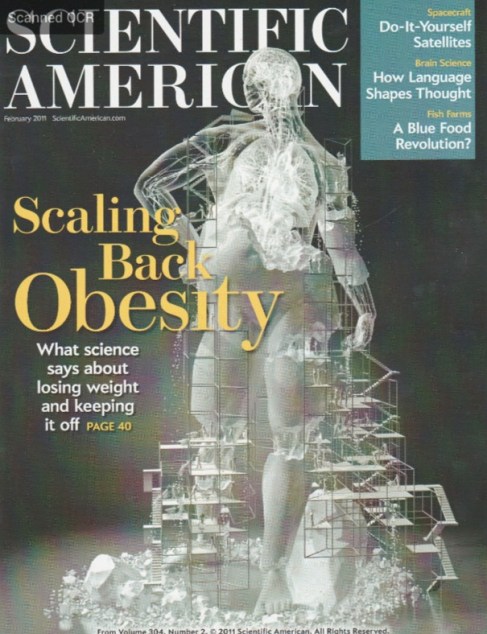
From my cover story in the February 2011 issue of Scientific American

Obesity is a national health crisis—that  much we know. If current trends continue, it will soon surpass smoking in the U.S. as the biggest single factor in early death, reduced quality of life and added health care costs.
Why are extra pounds so difficult to shed and keep off? It doesn’t seem as though it should be so hard. The basic formula for weight loss is simple and widely known: consume fewer calories than you expend. And yet….almost everybody who tries to diet seems to fail in the long run—a review in 2007 by the American Psychological Association of 31 diet studies found that as many as two thirds of dieters end up two years later

weighing more than they did before their diet.
   Maybe someday biology will provide us with a pill that readjusts our metabolism so we burn more calories or resets our built-in cravings so we prefer broccoli to burgers. But until then, the best approach may simply be to build on reliable behavioral psychology methods developed over 50 years and proved to work in hundreds of studies. These tried-and-true techniques, which are being refined with new research that should make them more effective with a wider range of individuals, are gaining new attention. As the NIH puts it in its proposed strategic plan for obesity research: “Research findings are yielding new and important insights about social and behavioral factors that influence diet, physical activity, and sedentary behavior….” read more (Subscription or payment to Scientific American needed to read full article at the site, but you can read a copy here)

Tagged

The Same Old Diet and Exercise Advice?

My cover story on obesity is out in the February issue of Scientific American. You can see part of the article on the Scientific American website, but most of it is behind a pay wall. I’d love to find some way to make some of it available freely in some form online here, without undercutting Scientific American‘s interests. I’ll see what I can work out. (Meanwhile, I see that a university has posted the full article here.)

The reader comments on the article (about 50 so far) are right there for all to see, though. They reflect a cacophony of opinions, most of them sounding rigidly held, about what has caused the obesity problem and what will make it go away. Needless to say, the Atkinites are out in force among the comments (and in blog posts about the article), lecturing everyone on how diet and exercise don’t work, how everyone except them misunderstands physics and biology, how it’s all carbs, carbs, carbs. They read one book by Gary Taubes (available in very long and very short versions), and they think they know more than most scientists do about metabolism and thermodynamics. Whatever the merits of the Atkins diet (and I don’t think there are many for most people, nor do most scientists and physicians), the kind of disdainful, pompous, simplistic certainty mixed with gullibility and obliviousness that many Atkins fanatics endlessly spout about this highly complex subject has come to feel very tedious to me. They’re welcome to their diet and their opinion, but I can only hope few would-be dieters are actually swayed by it. If you want to understand the Atkins claims, read Taubes, he’s a smart guy. But before you buy the conclusions, go out and ask everyone you know how long they stuck with the Atkins diet and kept the weight off. Or just go ahead and try it (I did), but if it doesn’t work for you long term, as it does not for the great majority of people (or me), please don’t give up on diets. And I urge you not to give up on exercise as useless in fighting excess weight, as Atkinites suggest.

Some commenters try to dismiss the message of the article as the same old advice we’ve all been hearing forever about how we have to diet and exercise. That’s an unfortunate point of view from several perspectives. First of all, the idea that advice should be dismissed because it’s been consistently given for a long time is a troubling one. Not smoking, wearing seatbelts, drinking in moderation–this is the same old advice, too. You could argue, of course, that an article that focuses on the same old advice isn’t very thrilling. What’s much more entertaining is the latest and greatest breakthrough scientific finding about losing weight, or the latest diet guru’s special claim on how to shed pounds with a simple change in diet. But it’s the endless stream of claims for new approaches and insights that has pulled people away from what those experts who have achieved good results with the overweight have long known: you’ve got to focus on diet and exercise habits, and try to find ways to get people to take them up and stick to them forever. Part of the point of the article was to survey the scene and show how the same old basic advice, and not the endless stream of latest and greatest, is still what works, and what this means for the obesity crisis. What’s more, the article points out prominently and at some length that there are indeed significant recent and ongoing improvements in our ability to help people stick to reasonable diets and exercise.

Yes, everyone has tried, and most have failed with, diet and exercise. But in spite of what many people believe (and some of the commenters imply) all diet and exercise approaches are not alike–far from it. A smart behavioral approach based on gradual, modest, livable changes that are strongly prompted and reinforced by others and by the environment is much, much more likely to succeed than the standard slash-calories-and-burn-up-the-treadmill plans most people subject themselves to, with predictable results. Very few people have embarked on a good behavioral program designed to bring on modest life-long lifestyle changes, rather than self-torturing in order to vaporize ten pounds in two weeks just so you can put them back on in the two weeks after.

Some people complain that I have some encouraging things to say about Weight Watchers. But the point I make in the article is that Weight Watchers is as close as most people ever get to a behavioral program, and that while it’s better than most other mass-market programs and is based on sound principles, it doesn’t come close in practice to being a full, state-of-the-art behavioral program that always stays true to those principles  And of course the great majority of overweight people and dieters haven’t even tried Weight Watchers, never mind a genuine, full behavioral program.

Well, I hardly expected the article to instantly strip everyone of their misguided obsessions with  breakthrough findings and fad diets, and their distorted views of what behaviorism is about. My goal, as usual, was to try to promote discussion, and hopefully a slightly more informed, reasoned and open-minded one than one normally encounters, at least with regard to obesity and weight loss.

Of Baseball Pitches and Fad Diets: When science gets it wrong

An article by John Kay in The Financial Times (and thank you, TheBrowser.com, for highlighting it) recalls economics icon Milton Friedman’s and a colleague’s observation that we can often get very good at something (Friedman used billiards as an example) without knowing much about the complex principles behind it. I myself always appreciated the fact that physicists used to argue that a true curveball in baseball was an impossibility and that catching a fly ball required solving trigonometric equations, while baseball players (and in the latter case even dogs) effortlessly accomplish these feats without much regard for their impossibility or mathematical demands. And it will be a long time before our best scientists and engineers can design a fighter plane whose multi-computerized flight systems can begin to approach what a fly can do evasive-flight-wise with a teeny speck of a brain–a mere 100,000 neurons, or one-millionth as many as an aeronautical engineer. The prodigious pattern-recognition capabilities and other elegant programming of our brains endow us (and other creatures) with the ability to intuit or otherwise toss off solutions that elude formal analysis.

This notion that analytically daunting phenomena are often simply accomplished by other means brings to my mind some of the interchanges I’ve had in recent months with metabolic experts in both the ultra-low-carb and ultra-low-fat weight-loss camps. They’ve got the science theory, they’ve got the rodent studies, they’ve got the diet studies, and voilà: the only way to lose weight is cut out carbs or cut out fat, depending on which camp you’re listening to. The two camps come to nearly opposite conclusions, and both are absolutely unwavering and uncompromising in their belief that the science completely and clearly proves they’re right. And of course there are many other scientifically sure-of-themselves diet-gimmick camps.

Back in college my math and physics professors occasionally inflicted on me and my classmates a certain type of killer problem–well, they were killers to me, anyway–in which we were presented with a step-by-step proof that started with perfectly valid assumptions, and ended up with an indisputably mistaken conclusion. We had to figure out where the proof had gone wrong. I usually had a great deal of trouble doing so–the errors were very subtle, and sometimes were semi-errors spread out among several steps. These problems left me with a deep and permanent appreciation of how right something could look in every aspect of every step, and yet end up flat-out wrong.

Though scientists and other highly trained experts should know better–for one thing, I would think most of them got that same kind of what’s-wrong-with-this-picture? problem in college–these folks often seem oblivious to the way that very right-sounding arguments can leave them impaled on silly conclusions. Of course, one of the main points of science is supposed to be to test theories to avoid this problem, but, as I’ve discussed endlessly elsewhere to the point where I’m tired of hearing myself repeat it (though fortunately others have been smartly chiming in on this subject lately) these tests tend to be terrible, and typically end up merely reflecting researchers’ biases rather than getting at any real truths. In the end, the scientists who do the best work tend to be not the ones who avoid bias–that’s just about impossible–but rather the ones who for whatever reasons end up with the right biases. When an expert’s instincts run off the rails, you get, well, for example, claims that fat or that carbs are entirely responsible for obesity. And these experts become so convinced that the science and data back them up that their beliefs become unreasonably unshakable

This willingness of intelligent, knowledgeable people to let solid-seeming scientific reasoning make them absolutely certain about what is obviously not so is remarkable. There’s so much easily observable evidence in the world all around us that people are able to lose weight and be healthy while still eating carbs, or still eating fat, that it just feels silly to have to make a point of arguing it–if someone doesn’t see it at this point, they’ve just decided not to see it. Tens of millions of people have tried the Atkins-style ultra-low-carb diet–it was initially a fad diet in the 1970s, and was reignited as a much bigger fad in 2002 after a New York Times Magazine cover story outlined the science that seems to back it up, an article written by the brilliant science journalist (and my friend) Gary Taubes. Meanwhile, tens of millions more have tried very-low-fat diets. How has that worked out for America? We all know the sad answer to that question. Out of the dozen or so people I know personally who went on the Atkins diet, not a single, solitary one kept the weight off for more than two years, and most lasted on the order of a few months. (Some years back, after getting a very convincing science lecture one-on-one from Taubes, I tried it, and lasted three weeks–I felt like crap the whole time, though I don’t seem to be typical.) I know a few people who lost weight on very-low-fat diets and actually kept it off, but they didn’t really stick with the diet–they added back modest amounts of fats back in, and they also happen to be very physically active people.

Needless to say, what happens to my personal acquaintances hardly constitutes convincing evidence. But if you look at the range of diet studies out there and talk to a lot of experts in the field and others about what has and hasn’t worked–something I’ve been doing quite a bit of for the past year–it becomes utterly clear that neither of these extreme diets achieves particularly good long-term adherence levels, and without long-term adherence a diet is at best a waste of time. To be sure, some people do permanently lose weight on one or the other approach, and in the Internet era a small minority of fad-diet beneficiaries can band together on websites and blogs and sound like a movement. More power to you if you’re one of these beneficiaries. But clearly for the vast majority of people cutting out carbs or cutting out fat is simply not going be a lifelong habit. It doesn’t matter whether cutting carbs or cutting fat will actually help you lose weight and be healthy–and it certainly doesn’t matter if the science appears to back the approach up–if you can’t stick with it. What we need, of course, is eating and exercise habits that we can stick with, and ways of being helped to adopt and stick with healthy eating and exercise habits. Cutting back at least a bit on carbs and/or fat is usually part of it, but it’s not typically the main part, and it’s rarely the entire shooting match. Having to drastically cut back on a major food group usually makes an eating plan nearly impossible to stick with long-term for most people. (But for those of you who insist on doing so, you might want to cover your bases with the Dukan Diet, a big fad diet in France that is now making its way to the US, and which advocates cutting out both fat and carbs, leaving you eating mostly protein. Good luck! In its defense, I’ll point out that it does also advocate behavior-oriented measures. On the other hand, many medical experts caution that eating very-high-protein can be dangerous over the long term.)

I’ve tried talking to various advocates of extreme diets about these seemingly obvious problems with their claims and it’s like talking to someone about deeply held religious beliefs. (Actually, some deeply religious people I’ve spoken with are much more open-minded about their beliefs than are some people who cling to dubious scientific beliefs.) Taubes is one of the smartest people I know, and he has surely become one of the most knowledgeable people on the planet with regard to how the human metabolism deals with sugar, but I just have to scratch my head over his (and his hard-core supporters’) response to the observation that working on behavior change seems to be a critical factor when it comes to permanent weight loss, the response essentially being, “All eating-related behavior is driven by carbs and their effect on metabolism, exercise doesn’t matter, the science proves all this, and that’s that.” Low-fat proponents, at least the ones I’ve interviewed, tend for whatever reasons to be much more aware of the role of behavior change than the somewhat fanatical very-low-carb crowd, but can be as tenacious in their patently implausible claim that a single type of food is largely responsible for obesity. Both low-fat and low-carb fanatics are of course very good at pointing out the holes in the scientific reasoning and evidence of the other camp, but blind to the holes in their own claims.

One of the things I really like about experts who focus on behavior change, and especially applied behavior analysis researchers–the folks who study ways of applying what is essentially B.F. Skinner’s science of behaviorism–is that most of them rarely seem to get hung up on theories. They just try to figure out through observation of people what best works in real life–either for an individual, or for the greatest percentage of people in a group–and then that’s what they push, while they continue to look for something that works even better, or on a broader range of people. It’s very hard to picture a behaviorist insisting that a pitcher can’t possibly make a baseball curve, or that eliminating carbs is a necessary and sufficient condition for shedding weight.

Dazed and Carbfused in the LA Times

To hear (for example) the Los Angeles Times tell it, there has been a reversal of opinion about what causes people to be overweight and unhealthy. Specifically, it used to be all about fat, but now experts realize it’s all about carbs.

Really? I don’t think that’s even close to being a fair representation of the consensus of expert opinion over the years or now. It’s true, eating very-low-fat was all the rage in the 90s, and there has certainly been a lot of noise made more recently by people who claim eating very-low-carb will solve our weight and health problems. But the fact of the matter is that a pretty large percentage of experts–or at least those experts who have actually been directly studying and working with significant numbers of overweight people and helping them lose weight–have fairly consistently maintained that the real problem is taking in too many calories and not burning enough of them. Yes, reducing fat was considered the prime target for many years, and reducing refined carbs is considered an especially good target right now, but for most experts the real goal is and has been all along to reduce intake of calories, and reducing both fats (especially saturated fats) and carbs (mostly refined carbs) has been and continues to be seen as an especially good way to do that. I’m 56 years old, and when I was a kid everyone knew that eating foods loaded with sugar and flour was a terrible idea if you were trying to lose weight–and it wasn’t exactly breaking news then, either. It’s just plain silly to claim that there has been a recent realization that excess consumption of sugar and white flour is a big contributor to obesity.

So why do some journalists seem convinced there has been a massive shift in opinion? Part of the problem, apparently, is that although obesity tremendously increases heart-disease risk, heart disease is actually one of the few serious illnesses that modern medicine has been able to get at least a bit of a handle on, and the mortality numbers for heart disease have been improving. But that good news has been somewhat offset by the fact that Type 2 diabetes is becoming a much bigger problem in society, and while that disease is also closely linked to obesity, excess consumption of refined carbs does indeed seem to be an especially risk-raising factor. That’s what the LA Times article emphasizes.
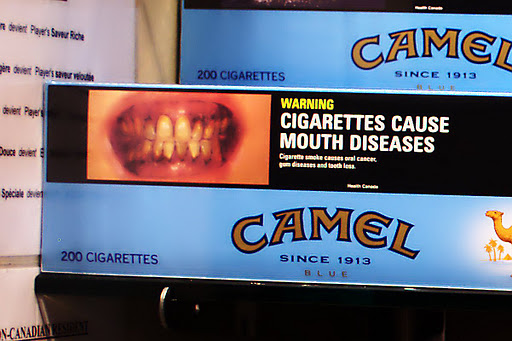
But what that article and many others overlook is that while certain types of foods may play special roles in raising risks for particular diseases, obesity tends to be the overriding risk factor. Staying at a healthy weight, almost regardless of how you do it, is what’s most likely to lower your risks of heart disease, diabetes and cancer (not to mention other benefits such as increased energy and mobility). If you eat very-low-carbs but end up overweight anyway you’ll be at much higher risk of disease than someone who manages to get to and remain at a healthy weight while continuing to eat generous amounts of carbs. Relatively few experts dispute this fact.

What’s really at issue, then, is whether being on a very-low-carb diet is more likely to help you lose weight and keep it off permanently than are other types of diets. You’ll hear very-low-carb advocates (like the experts quoted in the LA Times article) citing all sorts of studies in which these diets brought on impressive weight loss, with of course the expected improvement in health markers that almost always goes along with losing weight. But please, before you ever allow yourself to make any weight-related diet or other lifestyle decisions based on any of these studies, do yourself a huge favor and do the following two things. First, note how long the study went on for, and if it’s less than two years, ignore it completely. Researchers have been able to get people to lose weight on just about any sort of diet or lifestyle modification–a point colorfully illustrated recently by the professor who lost weight on a snack-cake diet. But researchers are usually not able to demonstrate that special diets enable people to keep the lost weight off for much more than a year, and often these studies (like the one most prominently cited in the LA Times article) only last a small number of weeks. Second, if you come across a long-term study that seems to suggest a particular type of diet did the trick in helping people keep the weight off, make a point of looking up other diet studies to see for yourself that advocates of other types of diets can make the same exact claims. The bottom line: studies in aggregate don’t clearly support any particular type of diet over others for long-term weight loss. If you’ve been reading other posts in this blog, you know what I’m going to say now: The way to lose weight and keep it off is to make gradual, comfortable, modest changes in your diet and activity so that you slowly move towards eating healthier, less-calorie-dense foods and more daily physical activity as routine, lifelong habits.

Now having said all that, let me say, as I’ve said all along, that (preferably gradually) reducing your intake of sugars and other simple carbs (especially by subbing in other, preferably less calorie-dense foods) is a great goal in a behavior-change-oriented approach to losing weight. Simple carbs often make up a huge percentage of calories in many people’s diets. Yet they are among the biggest offenders when it comes to providing that insidiously wonderful sensory experience that serves as toxic instant gratification for people who tend to overeat. What’s more, simple carbs are metabolic gunpowder, in that they tend to spurt as sugar right into the bloodstream, which (to oversimplify a complex picture) causes the body to overreact by producing too much insulin and quickly removing all that sugar. In other words, simple carbs cause your blood sugar to spike and then plunge. The result of a plunge in blood sugar is that you feel hungry. So eating simple carbs not only rewards you for overeating on a sensory level, it also makes you hungrier. Or at least that’s how it seems to work for many and probably most people. (And a constantly repeated carb-exacerbated blood-sugar spike and plunge can also eventually help bring on Type 2 diabetes, which is why simple carbs are linked to the disease.)

So yes, people who want to lose weight should generally make reducing simple carbs a key goal. But–and this is a big “but”–there is very little evidence that going quite a bit further and virtually eliminating your intake of carbs altogether, including complex carbs such as whole-grain foods and beans and other legumes, is a very good idea at all. And yet doing so is exactly what a very vocal group of ultra-low-carb extremists insists we all must do to become healthy. The ultra-low-carb crowd doesn’t merely claim that its approach is a good way to lose weight. It doesn’t even merely claim that it’s the best way to lose weight. It claims that it’s the only way to lose weight. That’s right–according to these folks, it’s not biologically possible to lose weight and keep it off unless you drastically cut down on your intake of all carbs, because carbs make your body produce fat, whereas other foods go into fueling muscle activity. They “prove” that this is true by detailing metabolic processes at great length and citing all sorts of studies, relying heavily on rodent studies and short-term weight-loss studies. And of course they highlight their own personal successes with very-low-carb diets. (By the way, when I say “all” carbs, I’m being a little imprecise. In fact, even ultra-low-carb enthusiasts recognize that fiber of the sort found for example in green vegetables, though it’s technically a carb, is fine and even desirable in your diet. So understand when I say “carb” I’m leaving fiber out of it, because there’s just no controversy there.)

Please don’t mix up the good advice to significantly reduce simple carbs with the somewhat extremist advice to almost entirely eliminate all carbs. The former is considered good nutritional advice by just about everyone, and in fact it really more or less always has been. The latter, which is of course essentially the Atkins diet, is considered to be not a good idea by most experts–the Atkins diet is widely considered a fad diet. Why? Well, for one thing, as appealing as it may be to imagine that all you need to know about weight loss is that fat just melts off when you cut out carbs and comes flying on when you don’t, the ultra-low-carb crowd has to do some pretty amusing backflips to explain how whole swaths of the planet (especially in Asia), and countless thousands of people in studies, and probably many people you know personally (maybe you yourself!), have managed to stay trim, and in many cases lose weight and keep it off, while still eating at least moderate amounts and in many cases plenty of all kinds of carbs. Needless to say, low-fat proponents present a different picture of how the metabolism deals with different types of food and cite different studies to produce an equally impressive-sounding (and possibly ultimately equally specious) case that reducing fats is the secret to losing weight. What’s more, many and possibly most experts are concerned about the possible negative health effects of diets that are extremely low in all carbs, at least in part because these diets are inevitably very high in fats. (Most ultra-low-carb extremists insist eating loads of saturated fats is perfectly healthy, and that especially worries a lot of experts.)

But to me, while these objections are well worth considering, they’re not the biggest problem with the claim that we all need to cut out all our carbs. The biggest problem would be that the ultra-low-carb diet, having received all kinds of publicity over the past 40 years, has by now been tried by tens of millions of people, and by all evidence only some minute fraction–perhaps a few percent–actually end up staying with it and keep on not eating carbs for many years. Is that surprising to you? Do you really think you can give up not only all sugar and white flour, but all grains, beans, fruit, rice, and potatoes for the rest of your life? Come on–this is a massive, drastic change in behavior, and it has to take place and permanently stick in a world where these delicious foods are ubiquitous and highly appreciated, and have always made for a significant part of just about everyone’s diet. Short of making carbs disappear from the planet overnight, I just think it’s silly to imagine some significant percentage of the population swearing them off and being able to hew to that plan for the rest of their lives. That’s why when you talk to people about the Atkins diet you hear the same story again and again: Tried it, lost weight without being terribly hungry, thought it was the greatest diet ever, eventually got cravings, cheated a little, cheated even more, caved in and went back to carbs, gained all the weight back and more. Yes, there are apparently thousands of people out there who really seem to have adapted to a permanently carb-free lifestyle. I say congratulations, and more power to them. But remember, take any goofy idea and you’ll find thousands of people out there who have made it work for them, and who then become determined to convince the rest of the world that it’s the only way to go. Some articles in the mass media, like the LA Times article, vaguely make it sound as if the experts widely back this extreme point of view. But go and search out other articles that back this point of view, and you’ll see the same handful of experts trotted out to make the same claims. They’re a real minority among experts in the field.

When you read about some study that shows reducing carbs helps with weight loss and health, or about some expert stating what a good idea it is to lower carbs, don’t assume they’re talking about the extremist position of near-total carb elimination. Journalists may occasionally conflate the two very different positions to suggest there has been some giant sea-change in thinking about carbs, but it’s not really the case. Yes, it’s fair to say there is now more attention being paid to carbs than before, and reasonably so, but the basic advice has actually been fairly consistent for decades: Take it easy on simple carbs and especially sugar, and take it easy on fats and especially saturated fats, because these are both sensory-stimulating, high-calorie-density foods. These are well-established strategies that have been known for decades to help with weight loss that can be permanently maintained.

Now quit reading blogs and go out and take a brisk walk. Then come back and reward yourself with a small bowl of your favorite complex carb.

Should the Non-Obese Mind Their Own Business?

Is it right to push the overweight to shed their excess fat? In spite of the many strong and simplistic opinions that continue to be loudly expressed on this question, it is actually a charged and complex one that deserves some careful and nuanced consideration.

First of all, ought we as a society or as individuals have any say in what sort of weight it’s OK for others to carry?  The arguments from one side: As Sarah Palin puts it, it is among our “God-given rights” to be obese; it may not even be as bad from a health perspective as everyone makes it out to be; and besides, the overweight are typically powerless to do anything about it, so why make them feel bad about it? From the other side: Obesity is, according to a wealth of evidence, a major health crisis that affects all of us, in that the burden that obesity-related disease places on the health-care system raises everyone’s health-care costs; obesity is associated with lower productivity that hurts the economy; and the prevalence of obesity makes it more likely that children and others will become obese, because as social creatures we closely influence one another.

Does pushing the overweight to lose weight even accomplish anything? On one side: The overweight already want to lose weight, and many have tried desperately to do so, so giving them grief about it only makes them feel worse, and in fact it tends to be counterproductive. On the other side: Many of the obese aren’t working at diet and exercise, and may not even see their or their children’s excess weight as much of a problem, suggesting there’s room to usefully raise consciousness; and doctors, public-health officials, early education providers, loved ones and close friends, at least, can’t be expected to stay mum as people they care about or are to some extent responsible for remain on a collision course with obesity-related disease.

Is losing weight simply a matter of taking responsibility for one’s behavior?  On one side: Anyone can lose weight–just eat less and exercise (or do whatever magic one-size-fits-all solution you believe in, be it cutting carbs, or cutting fat, or drinking water, etc.). On the other: It’s in the genes, and diet and exercise won’t fix it.

My own take on these questions:

· I think it’s absolutely fair for any of us to get involved in encouraging the overweight to lose weight, because of the hard and soft costs to society. It’s real money, it’s our money, and it affects our children.

· I think attempts to push the overweight into losing weight are frequently ineffective, harsh and stigmatizing, and that’s just unfair, unreasonable and even cruel. We ought to only push in certain, careful, helpful ways, and only so far. Instead of being confrontational and critical, especially on a personal level, it’s much more reasonable and helpful to make changes in society that will make sure everyone gets the right messages about health, and is prompted to eat healthier food and become more active. We can make these changes in schools, in the workplace, in foodstores, and in the media. And we can make more and better behavior-change resources available for individuals and families. At the same time, we need to stop muddying up the picture with the sort of distorted messages that encourage people to either downplay the problem of obesity or to think that fad diets, excessive exercise, surgery or pills can fix it.

· I believe most people who are significantly overweight, with some exceptions, can lose weight and become far healthier by changing diet and becoming more active–they are absolutely not doomed by genes, in spite of all the anecdotal evidence and highly flawed studies that are held by some to suggest otherwise. But that’s not the same as saying the overweight need to get on the ball and fix themselves. It’s clearly extremely challenging for most people, overweight or not, to simply cut way back on their calories or take up intense exercise regimens and then maintain the weight lost that way–our bodies and brains fight that sort of traumatic intervention with everything they’ve got. But if we can fix the environment and otherwise help the overweight into making a series of relatively small, gradual, easy-to-live-with changes that become lifelong habits, most overweight people will benefit from it, and without having to submit to futile self-torture. If our involvement takes the form of assistance and encouragement and support, then we can help make a difference instead of merely being nasty gadflies. That attitude puts the blame for obesity where it belongs: on all of our shoulders.

I know many and probably most overweight people simply want to be left alone about it. But I don’t think we’re obligated to respect that wish–not if it’s a condition that affects all of us. Let’s just make sure we’re being reasonable, respectful, caring, wise, and helpful about the sorts of tactics we bring to bear.

Misunderstanding reward and punishment in obesity and fitness

I frequently run into the contention that enlisting food–typically dessert or other treat foods–as a reward for someone who is trying to lose weight is a terrible idea because it will make the person like food more. The theory here, apparently, is that we learn to associate whatever is used as a reward with good feelings, and so it becomes more desirable. The same supposedly goes for punishment, in the opposite direction: We end up developing a strong distaste for what is used to punish us. One fitness expert I’ve been following on Twitter, and for whom I have tremendous respect, has been arguing lately that when gym teachers punish children for not following directions by making them, say, run laps, the kids end up being “programmed” to hate exercise.

Though almost everyone seems to accept this reasoning–apparently the notion just strikes people as intuitively obvious–there’s really badly muddled thinking behind it. The basic problem is that this thinking confuses the causes and effects of reward and punishment. In general, you won’t at all like something more because it’s enlisted as a reward, or dislike it more because it’s used as a punishment. Why would you? If your boss decided to reward your excellent performance with the honor of emptying the department trash, would you start to like emptying the trash? I doubt it. If your boss said that every time you fail to meet your annual objectives he was going to punish you by sending to Hawaii for a week, would you come to hate going to Hawaii? I don’t think so. Having something enlisted as a punishment or reward doesn’t in general have a big effect on how much you like or dislike it. It’s the other way around: something serves as an effective punishment or reward because you already like or dislike it. If you like something that someone tries to use on you as a punishment, then it won’t be a punishment, essentially by definition. The person may intend to punish you, but he’s actually rewarding you. The same holds for trying to reward you with something you hate–you won’t end up liking it, you’ll just find it very unrewarding.

An effective reward or punishment changes how you feel about the behavior being rewarded or punished, not how you feel about the reward or punishment itself. If your boss sends you to Hawaii to reward your excellent performance, you might well feel much more motivated to perform your job well. But it won’t cause you to like going to Hawaii, you already liked going to Hawaii, which is why your boss was clever to chose it as a reward. If she chooses to reward you with the job of emptying the trash, you won’t be programmed into disliking emptying the trash, you already disliked it, which is why it was a really dumb choice of reward, and will not likely inspire you to work harder. The same goes for using food as a reward or running laps as a punishment. You like the food treat, so you’ll work harder to get it as a reward–but it won’t cause you to like the food more, you already liked it. If a kid likes running laps, then the coach is being foolish to make the kid run laps as a punishment–it won’t be a punishment at all, and won’t make the kid dislike running laps. If a kid already dislikes running laps, then the coach is indeed effectively punishing the kid by making her run laps–but it won’t be programming the kid to hate running laps, the kid already didn’t like running laps.

Now, there can be complicating circumstances that blur the picture a bit. For example, someone can turn something you like into a punishment by making you overdo it. For example, you might like running, but someone could punish you by making you run brutally long distances in the cold and rain, and that might indeed change your feelings about running. But you didn’t like running brutally long distances in the cold and rain in the first place, so it’s not really the same thing as being made to dislike something you liked. Also, having someone want to punish you might fill you with guilt, shame or even self-loathing, and those feelings might be intense enough to end up tainting your feelings about whatever it is that is nominally enlisted as punishment, even if it were something you liked–so in that sense, you can end up being made to dislike what’s being used to punish you. But if you’re feeling guilt, shame or self-loathing over your behavior, then that’s the real punishment–it’s an internal, self-inflicted one–and the imposed external “punishment” is really just something superfluous that you’re being accidentally conditioned to associate with those feelings. (To get a bit technical, it’s more Pavlovian reflexive conditioning than Skinnerian punishment, which is really a different animal. You’ll know what I mean if you’re familiar with the 1971 Stanley Kubrick film A Clockwork Orange, based on the novel by Anthony Burgess, where Beethoven’s music becomes accidentally associated with the feelings of nausea and dread forced on the protagonist when he’s exposed to violence.) And of course all this works the same way for reward, in the opposite direction. But this sort of accidental conditioning with superfluous reward and punishment isn’t likely to happen in most food-treat and lap-running situations, or in most everyday situations. If you feel that badly about having done something you shouldn’t have, you’re probably just not going to do it very often, so no one will feel a need to tack on a misguided “punishment.” If you feel great after you do a certain thing, you’re probably going to do it on your own, without requiring a food treat.

Actually, food is a great reward in a weight-loss or fitness program. Behavioral experts who have studied fitness and/or obesity–in other words, real experts on reward and punishment, and who by the way tend to be in great shape themselves–routinely use food as a reward. One researcher told me about an obese, previously sedentary child who is now losing weight in part through daily walking. How did the parents get the child to take up walking? By allowing him to pick out a small, favorite food treat at the store–as long as the child walks there and back with the father. One of the top obesity-focused behavioral researchers in the country told me he rewards himself with a mango smoothie after a run, and that he finds himself thinking about that smoothie when he’s about halfway through the run, which helps pull him along–and he helps others keep to their exercise plans with a similar use of food treats. I always reward myself for completing a workout with a small sundae-like treat, and absolutely find it helps get me through the last few sets of crunches or pull-ups or whatever.

Now I do happen to think conventional PE classes (where they haven’t been lost to budget cuts) are a potential nightmare to lifetime fitness, and do indeed cause some kids to dislike participating in exercise. But that’s not because exercise is routinely used as punishment in these classes. The exercise is usually meant to be fun and to make kids feel good, because the gym teacher herself probably always enjoyed and felt great about participating in sports and exercise. But the grueling training for fitness tests, the intensely competitive ball sports, the difficult gymnastics, the exhausting wrestling matches–this is all stuff that many kids don’t like doing, so these kids are unintentionally being punished for participating. Even kids who do like this stuff aren’t likely to keep it up much beyond high school. Instead, I think PE classes should emphasize establishing moderate, comfortable, enjoyable exercise as a daily lifetime habit, with the more intense, athletic, competitive stuff perhaps offered as an additional option for those who truly enjoy it. Taking it easy on kids in PE class wouldn’t be promoting athletics as strongly, but we’re not much of a nation of adult athletes anyway. Better off settling just to get us to not be sedentary as adults. If America were by and large a nation of walkers–or bikers, joggers, casual weightlifters, dancers, or any kind of physical-activity-doers–I firmly believe, as do many experts, that we wouldn’t have an obesity crisis, and we’d be far, far healthier on average.

5 reasons why the discovery of the Fat Gene won’t help you lose an ounce (and might cause you to gain weight!)

The headline: “Discovery of ‘fat gene’ raises hopes for fighting obesity”

The five reasons:

1) Mice! The study was conducted on mice, and most research on mice doesn’t end up translating to humans.

2) Genetically engineered mice! The study was conducted on mice whose genes had been tinkered with, and findings from these studies are often even shakier, because no one really knows what these animals are. They’re usually tinkered with in a way that’s supposed to make their disorder more like a human disorder, but these imitation disorders rarely turn out to be good stand-ins for the real thing. And the resulting mice aren’t exactly normal mice anymore, or at least breeds of mice that anyone is familiar with. So you just don’t know exactly what to conclude from studies based on these critters. Very few practical treatments have come from studying these “transgenic” mice. (Which is not to say they aren’t marvelous contributors to basic science, and we should all be big supporters of basic science. But basic science, by definition, won’t do anything for you–not until someone figures out how to turn it into applied science.)

3) You’re stuck with your genes. Even if the Fat Gene discovery translates to humans, what are we going to do with the knowledge that you have this gene? If you do have it, then presumably you’re fat, but you probably knew that already, didn’t you? There’s gene therapy, in which you’re injected with a virus carrying a gene that the virus can insert into your cells to replace the trouble-making gene. But gene therapy ran into some ugly problems in the early days just over a decade ago, and though more recent results have been encouraging, I haven’t heard anyone in a position to know claim any gene therapy is likely to be widely available, or available for non-life-threatening conditions, any time soon, it’s just considered too risky. The discovery of the Fat Gene might in theory lead to better diet and exercise advice based on knowing you had the gene, but that’s unlikely–everything has been tried, diet-and-exercise-wise, we know what works and what doesn’t, and it tends not to differ in major ways from person to person, regardless of genes. On the other hand, if a certain gene, or an overactive copy of a gene, were identified by itself as truly the major cause of being overweight, the goal would be to develop a drug that counteracts the effect of the gene. (Or if it’s the absence or non-functioning of a gene causing the trouble, a drug that would work in its place.) In other words, discovery of the Fat Gene will lead to the Fat Pill! Except that…

4) …Gene discoveries don’t end up leading to good new drugs. Not so far, anyway, in spite of a few decades of trying. The problem, as many leading molecular biologists, including some who actually work for pharmaceutical companies, have told me, is that individual genes rarely cause problems by themselves, they usually work as a part of a network of hundreds of genes that work together to cause the problem. So taking a pill that counteracts the effect of the one gene wouldn’t solve the problem. Even if the gene did mostly cause the problem on its own, any drug you take to try to counteract what the gene is doing would almost certainly end up interfering with the work of other genes, and with other functions that one gene is performing. In other words: side effects. That’s why most drugs don’t do much good for most people, and end up doing harm to some people. That’s true even of drugs that make it to the market, and even of drugs that become best-sellers, let alone the thousands of experimental drugs that get washed out along the way.

5) Big gene discoveries rarely hold up. Just wait. In a couple of months, you’ll see studies that show this gene doesn’t seem to be a big deal after all. If you look for the studies, that is. The discovery that a previous discovery wasn’t the big deal it was made out to be rarely makes headlines. Everyone either just forgets about the original big discovery, or mistakenly thinks it’s still considered a big discovery. But you’ll be ahead of the game, because now you know right off the bat why it’s probably wrong to think of the Fat Gene as a big discovery. Although…

6) …Maybe it really is the Fat Gene. Hey, sooner or later scientists will actually be right about one of these things. And I will have been wrong. It could be this time! Let’s hope so. But in the meantime, please don’t ease up on your commitment to staying healthy by eating sensibly and getting regular, enjoyable exercise in. If you do slip back to your old, unhealthy ways because you think science is going to save your butt, then all the discovery of the Fat Gene will probably have done is make you fat.

Scary cig pix are old hat elsewhere. Fried chicken next?

It’s great that the FDA is trying to get gruesome, graphic, smoking-harm-related images on cigarette packaging. It’s also about time, considering some other countries have been doing it for a while. I took this picture a few months ago about 60 feet outside of the US at the Canadian border crossing next to Vermont. This is a classic behavioral technique: Tweaking the environment to prompt desired behaviors, or discourage undesired behaviors. Let’s get this done for cigarettes, and then move on to junk food. My whole interest in behavioral approaches to obesity was first prompted by a cancer researcher in the UK who told me he thought cans of Coca-Cola should be treated like packs of cigarettes. Enjoy!


Jump-Starting the Orbital Economy

Why NASA’s plan to get out of the manned spaceflight business may (finally) make space travel routine

From my article in the December 2010 issue of Scientific American

Two years ago deceased Star Trek actor James “Scotty” Doohan was granted one last adventure, courtesy of Space Exploration Technologies Corporation. SpaceX, a privately funded company based in Hawthorne, Calif., had been formed in 2002 with the mission of going where no start-up had gone before: Earth orbit. In August 2008 SpaceX loaded Doohan’s cremated remains onto the third test flight of its Falcon 1, a liquid oxygen- and kerosene-fueled rocket bound for orbit. Yet about two minutes into the flight Doohan’s final voyage ended prematurely when the rocket’s first stage crashed into the second stage during separation. It was SpaceX’s third failure in three attempts….read more

What four new studies hint about fixing obesity

Four recent obesity-related studies have come out in the past few days that are worth taking a slightly closer look at. One reported that overweight people who have successfully taken and kept off weight tend to stick to structured exercise programs. Another found that male rats made obese and diabetic via high-fat diets tended to have diabetic female offspring, while male rats given normal diets did not–and since there was no general difference between the genes in the two groups, and because the mother rats in both groups were non-obese and non-diabetic and so couldn’t have passed along anything different in utero, the explanation lies somewhere in environmental differences relating to the dad rats’ different diets. (Yes, rodent studies usually don’t translate well to humans, and this might well fail to translate, too, but for what it’s worth it was an unusually simple and clean study, no genetic engineering or exotic behavioral manipulation or psychological interpretation involved.)

A third study found that people who live in areas where the Mediterranean diet (lots of “good” fat, lean protein, grains, vegetables and fruit, little saturated fat) is prevalent tend to keep weight off as they get older better than people in other areas–but (hallelujah!) the researchers and even (at least in this particular Reuters article) the reporter prominently note that it may well be behavioral and other environmental issues common to people who live on this diet that does the trick rather than the diet itself. The last study predicts US obesity rates have not peaked at about a third as other experts have claimed, and will continue to rise to hit 42 percent–and add that part of the problem is that hanging around with obese people tends to make it more likely that a person will herself become obese, so that the higher the obesity rate goes the more it increases the chance that it will rise further (up to a certain point).

I find all of these studies interesting in their own right, but the main reason I mention them is that all four highlight behavioral and environmental issues as being key to obesity rather than–or at least in addition to–the choice-of-food-types and the genetic issues that are often emphasized in studies. I hope I’m seeing a trend here. We can’t get rolling on solving the obesity problem until we stop fixating on poorly understood physiological processes and on molecular biological factors that we can’t do anything about, and start focusing on behavioral and environmental changes that we can start working on today. That’s what got us into this fix, and that’s what will get us out.

Is it all about the calories?

Does which foods you eat matter in weight loss?  I don’t think any aspect of obesity and weight loss is more confusing, or more responsible for people’s muddled thinking and poor choices in approaches to taking and keeping weight off.  Most of the answers we’re given to this question fall roughly into what seem like two sharply contrasting camps.  The “it’s all about the calories” camp (be warned, this link brings to you a nasty little article) suggests it doesn’t really matter what you eat, you just need to eat small-enough amounts of it to not exceed the calories you’re burning.  The “eat healthier foods” camp suggests that you will lose weight if you emphasize certain foods over others–some push fruits and vegetables, others “less-processed” foods, others less-calorie-dense foods, others low carbs, others low fat, and so forth.

Here’s my take on it. (I’ve been interviewing many, many respected experts in the obesity field and reading quite a lot of studies and articles, so I’m not entirely shooting from the hip here, or at least not more than anyone else. Consider this a synthesis of what I’ve been finding out.)  The bottom line is that both camps are sort of right, but they’re both a little misleading, too. It’s true, you can lose weight eating anything if you keep portions small enough, and you can gain wait eating only vegetables if you eat enough of them. But most people are indeed more likely to keep the weight off if they lose it by emphasizing certain types of foods. That’s because some foods more than others tend to push the various physiological and perhaps psychological buttons that will make it harder for you to keep control of your calorie intake. In the end, you’ll still have to take in fewer calories than you’re burning–but most people will find it easier to do that with some menus than with others.

So which foods should the would-be weight loser emphasize? There’s a certain amount of disagreement on this question, to be sure, but a rough consensus of evidence and expert opinion favors cutting down significantly on sugar and refined carbs (like non-whole-wheat bread and pasta), taking it easy on fats (especially saturated fat, for other health reasons), eating good amounts of relatively lean protein (especially fish, chicken, and soy, prepared without much oil or butter, but beans, wheat gluten, egg whites, whey and pork can be good sources of lean protein, too), and eating lots of vegetables and reasonable amounts of fruit and other foods high in fiber.  Most experts don’t advocate ultra-low-carb diets (or even counsel cutting down much on complex carbs like whole-wheat foods), and most don’t think an ultra-low-fat diet is worth the trouble.  There are three main weight-control benefits to these recommended foods: They tend to be less calorie-dense, so they feel more filling per calorie and it’s easier to meter how many calories you’re taking in compared to a small, dense calorie-bomb like a piece of candy or fried chicken; they’re less intensely stimulating to your pleasure systems, so you’ll be less likely to feel compelled to pig out on them; and they tend to enter the bloodstream at reasonable rates, avoiding the blood-sugar spike-and-plummet effect you get from eating simple carbs that can lead to intense appetite swings.

Now having said all this, I’d like to point out that while eating “healthier” foods is a helpful and for most people important element of keeping weight off, I don’t think it’s necessarily the most important element, and it’s absolutely not the only element, as is often implied by some weight-loss gurus.  Most people will not be able to keep much if any weight off just by trying to take in more healthy food, if everything else they do and everything else that’s going on around them otherwise remains the same. For most people keeping weight off requires a full-court press via a “behavioral” approach, something I’ll be talking a lot about here and elsewhere. Part of that approach also involves finding out which healthier foods work best for you in terms of being as satisfying as possible without pushing your appetite and cravings buttons. And it also involves being smart about the way you introduce these foods into your daily menu and make enjoyable habits out of eating them, and about how you regulate your intake of these healthier foods as well as of those less-healthy foods you may also want to take in in order to have a satisfying diet.

Does all this seem like a lot of work to figure out, put into action and maintain? Well, it can be, but if you get good guidance it shouldn’t be all that hard. Even if it is a lot of work, the benefits people get out of losing excess weight in terms of their health and how they feel almost always seem worth the trouble. And if you do the behavioral approach right, losing and keeping off weight–especially if you lose it slowly, and try don’t lose a large percentage of your body weight–need never be hugely demanding or uncomfortable, and in fact ought to be highly satisfying and in many ways enjoyable.