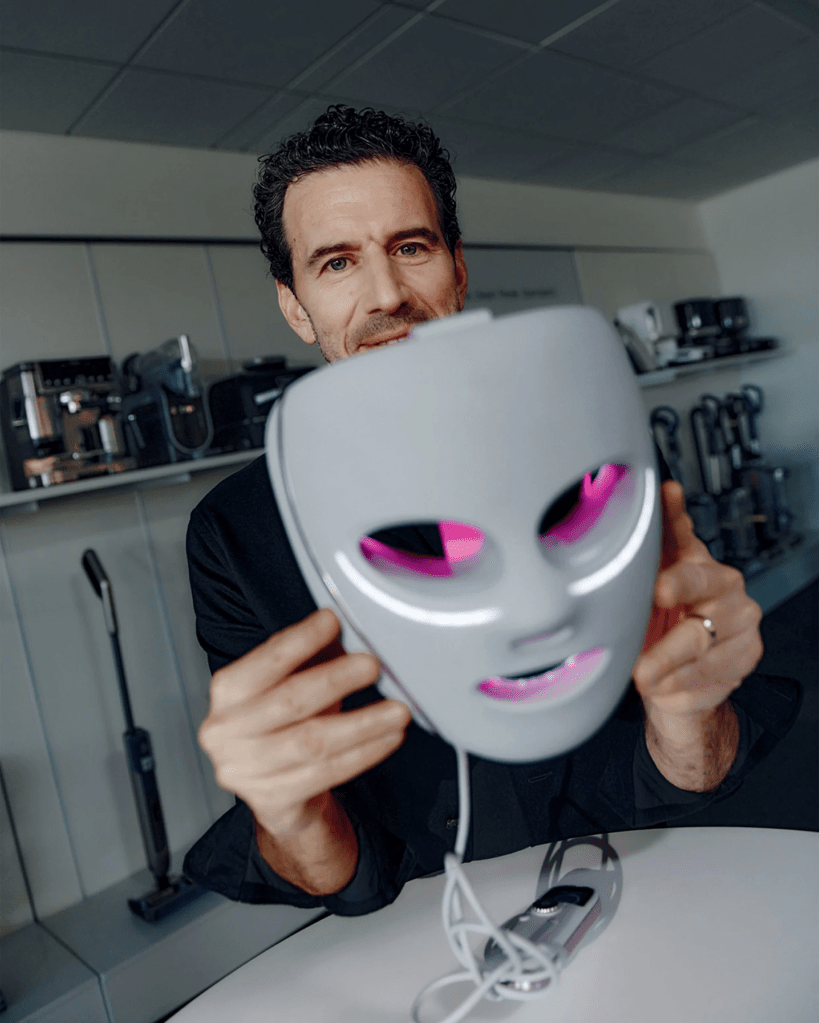
From my article in a special publication of Scientific American sponsored by the Buck Institute, Google, Optispan and Phenome Health, published March 21, 2025
Lifespan is outpacing the number of years people live in good health. Scientists are developing ways of preventing illness and slowing the aging process….Read more

And in the same special issue, see my article on how AI is reshaping healthcare.
Matt Mullenweg has been referred to by many as the “benevolent dictator for life,” or BDFL, of WordPress, the software that powers almost half the web. But in recent months, as a spat with an underdog rival unfolded on social media, Mullenweg definitely has come across as more dictatorial than benevolent. “I don’t identify with the term ‘dictator,’” he says. “A nicer way of saying it would be ‘enlightened leader.’” But just how tightly Mullenweg controls WordPress, and how aggressively he’s willing to wield that control, has caught many by surprise over the past few months. And it all began when Mullenweg got very annoyed, very publicly, at a $400 million-per-year company called WP Engine….Read more
From my article in a special issue of Scientific American sponsored by the Davos Alzheimer’s Collaborative, published April 15, 2024
The drug treatments that attack plaque are going to become increasingly effective, insist most researchers. Now that two anti-plaque drugs have been proven to slow the progress of cognitive decline, researchers and pharmaceutical companies can focus on new, better ways of hitting plaque….Whether through existing anti-plaque drugs or new ones, researchers expect to see more patients get more benefits as research and clinical experience help find ways to match the right drug to the right patients, and to zero in on the optimal doses and timing….Read more
And in the same special issue, see my article on breakthroughs in Alzheimer’s prevention.
From my article in Newsweek, published Jan. 11, 2024
….Texas is the only state in the U.S. that generates more than a third of its electricity from wind and solar energy—energy that’s unaffected by the high temperatures. Even when solar panels fizzle out at night, the state’s solar farms keep the energy flowing, thanks to its investments in massive banks of batteries that soak up energy by day and release them in the dark.
As most states struggle to get to substantial generation of green energy, big wind and solar numbers are almost old news in Texas. Driven by a combination of huge power demands, copious sun and wind, a love of frictionless free-market enterprise, and surprisingly visionary leadership from past Republican politicians, Texas has steadily plowed so far ahead in big solar and wind projects that its green energy output could well surge past those of fossil-fuel plants in the state….Read more
From my cover story in Newsweek, published November 15, 2023
Israel’s 40-mile-long chain of walls and fences at its Gaza border teems with sensors and automated weapons. It is supported by an electronic intelligence network that monitors every phone call, text message and email in the territory. A large, well-trained military stands ready with state-of-the-art weaponry to respond rapidly to threats.
These defenses were built upon much the same technology that the U.S. military uses to keep its citizens safe and watch over its interests around the world and NATO armies use to monitor the border with Russia and the Middle East. So when thousands of Hamas militants slipped through Israel’s defenses on October 7, killing 1,200 Israelis and taking about 240 hostages, what presumed to be a vast technological advantage suddenly seemed deeply flawed….Read more
From my article in Newsweek, published Oct 19, 2023
Three years ago, Sanjay Vijendran’s colleague told him about a scheme that seemed straight out of science fiction: beaming energy from solar panels in space down to the Earth. “The whole idea was new to me,” says Vijendran, a scientist at the European Space Agency (ESA). “It sounded like something you’d laugh at.”
No one’s laughing now, least of all Vijendran. He’s heading ESA’s Solaris project, which is working toward launching satellites that by the mid-2030s could be beaming down a sizable fraction of all the energy Europe needs….Read more
Headlines have been screaming lately that America’s honeymoon with remote work is over. These claims miss the mark. The evidence suggests that the full-time office workweek is unlikely to return to most organizations any time in the foreseeable future. What may have started as a pandemic-era dalliance has become, in only a few short years, deeply embedded in America’s workstyle. But there’s a catch….Read more
From my article in the September 8, 2023, issue of Newsweek
….Diets that emphasize intermittent fasting, nurturing good gut bacteria and cutting out carbs have surged in popularity, but their basis in science is sketchy. The arrival of a new generation of astonishingly effective weight-loss drugs offers the tantalizing prospect of blunting America’s obesity problem. But it’s not clear if a lifetime drug regime will be safe or affordable for the 42 percent of Americans who are obese….Read more
From my articles in the Aug. 19, 2023, issue of Newsweek
An artist whose works evoke iconic works of the 1940s, 50s and 60s hit home the grim future awaiting our landscapes if we don’t stop climate change. A refugee of the Rwandan genocide helps the electric grid enlist AI to keep the lights in extreme weather. A college grad who couldn’t find a job in environmentalism becomes a powerful voice for diversity in the eco-industry. These three innovators show how the inspiration to save the climate can come from unexpected sources.
From my article in Newsweek, posted August 14, 2023
Trondheim, Norway, a city of 180,000 just 200 miles from the Arctic Circle on the coast of the frigid Norwegian Sea, hardly seems an ideal location for harvesting energy from the sun and surrounding environment. But a new 200,000-square-foot office building there is producing nearly half a million kilowatt-hours of renewable energy per year—twice as much as the building uses. The extra energy is powering other nearby buildings and charging electric cars, buses and boats throughout the city.
….A confluence of new technologies and improving economics, as well as climate-change-inspired government regulation, are leading to the next wave in big construction: ultra-sustainable buildings….Read more
From my article in the June 9, 2023, issue of Newsweek
The explosion of progress in artificial intelligence in recent months has surprised even the scientists and engineers who specialize in applying AI to real-world tasks. “A few years ago I never would have imagined we’d advance this far this soon,” says Zhe Jiang, a University of Florida researcher who studies industrial applications of AI.
The recent excitement—and concerns—over this technology were ignited when several major companies released stunningly capable new programs in swift succession, including OpenAI’s ChatGPT, Microsoft’s Bing and Google’s Bard. These “large language models” are programmed to pore over trillions of words of text from the internet to learn how to produce very human-like text and images on their own in response to plain English questions and requests….Read more
From my cover story in the May 12, 2023, issue of Newsweek
Danny Barcelona lives in constant fear that doctors will stop the medications he considers lifesaving. The 66-year-old has suffered for more than two decades with a debilitating nervous-system disorder and severe back and shoulder pain, forcing him to close his once-thriving dental-lab business in Asheville, North Carolina, and sometimes leaving him bedridden for 18 hours a day. That he can function at all, he says, is due to his ongoing prescription for oxycodone, an opioid….Read more
From my cover story in the Jan. 27, 2023, issue of Newsweek
More than 70 million Americans are hit by cybercrimes every year, often leaving people defrauded, spied on or publicly humiliated by having private photos and other information published online. More than two-thirds of small businesses have been victimized by hackers at least once. Some experts believe that just about every large organization and government agency has been breached. Last year, 22 billion personal and business records were exposed in hacks on U.S. companies—and that doesn’t include breaches that were unidentified or unreported, which may well represent the majority of hacks. As bad as it’s been, it’s getting worse….Read more
From my cover story in the Dec. 16, 2022, issue of Newsweek
No state is more car-crazy than California—and they’ve paid a big price for it, not just in $6-per-gallon gas. The heat waves, droughts and calamitous wildfires that have ravaged the state in recent years are by-products of climate change, to which greenhouse-gas emissions from California tailpipes (and elsewhere) have contributed. To Governor Gavin Newsom and other state political leaders, the fix is clear: Regulate the tailpipe out of existence….Read more
From my cover story in the Nov. 4, 2022, issue of Newsweek
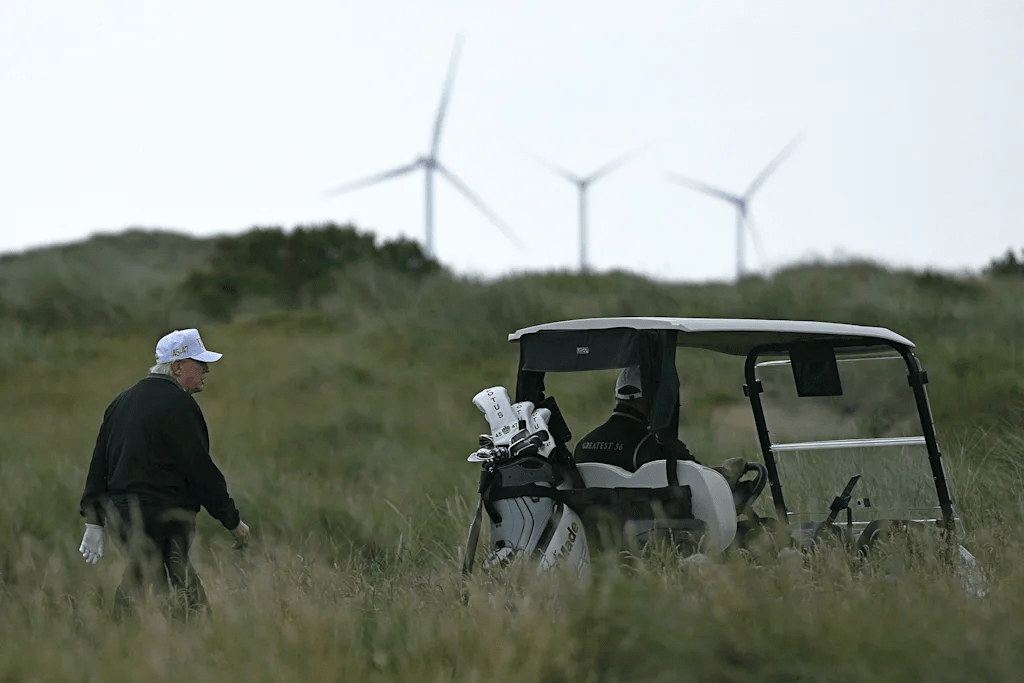
The specifics of Trump 47’s policies—to the extent that Trump bothers with policies—are a matter of speculation. But some broader actions seem certain, according to current and former Trump insiders interviewed by Newsweek: avoiding his first-term approach of appointing people who might protect him from his worst instincts and instead packing the administration with loyalists; trying to get a firmer grip on the military with an eye to consolidating power; drastically shrinking the civil service and throwing a steady diet of red-meat culture-war goodies at his base….Read more
From my article in Fast Company, posted October 3, 2022
One of the tech darlings to come out of the Great Recession of the late 2000s, Kickstarter popularized crowdfunding. Since its founding in 2009, its platform has helped to raise $5 billion, launching more than 220,000 projects, including businesses like Oculus, Allbirds, and Peloton. The number of funded projects on the site is reaching new heights, and this year 54% of all projects have hit their funding goals, steadily up from less than 43% in 2018. But the past couple of years haven’t been entirely smooth sailing for the company. And now, a new CEO is hoping to get it back on course….Read more
From my cover story in the September 9, 2022, issue of Newsweek
As the world grapples with the reality of living with COVID-19, a rogue’s gallery of deadly pathogens seems to have stepped up the attack. Monkeypox, a close relation of smallpox, is officially a public health emergency worldwide. The current outbreak—the first large one ever outside of Africa—has spread globally to more than 45,000 people, including more than 16,000 confirmed cases in the U.S. And polio, a disease routinely referred to as “eradicated,” is circulating in and around New York City and London, bringing with it the irreversible paralysis that strikes about one of 200 people infected with the disease….Read more
From my article in The Yuan, posted August 1, 2022
Medical errors cost the lives of some 250,000 people a year in the U.S. alone, calculates the BMJ, making them the third leading cause of death, with a price tag of some $20 billion a year. Research suggests AI can help cut this staggeringly high error rate. For example, AI systems have been shown in different studies to exceed physicians’ accuracy in diagnosing cancer in both pathology slides and imaging, and in detecting brain hemorrhages that lead to stroke, reducing both false positives and false negatives.
But even if AI systems get it wrong at a lower rate than physicians, they may still be seen as causing more problems than they solve. That’s because there is a well-established infrastructure designed to catch, analyze, prevent and correct conventional medical errors. But there is as of yet little such infrastructure for AI medical errors….Read more
From my cover story in the July 29, 2022, issue of Newsweek
“It’s no longer premature to say that Trump could end up in prison,” says Michael Conway, a longtime trial lawyer who started his career as counsel for the House Judiciary Committee during the impeachment inquiry into Richard Nixon in 1974 , and who now teaches ethics and the law at Northwestern University. “It’s a winnable case.” Here’s a look at what charges Trump may well be facing—and, if they are in fact brought against him, how the results are likely to play out in the courtroom and conceivably the prison system….Read more
From my cover story in the June 24, 2022, issue of Newsweek
In the half-century since Roe v. Wade, the science of fetal development and early birth has advanced considerably. Neonatal physicians and researchers have modified their thinking on when a fetus is and isn’t viable outside the womb, on how it makes the transition from a bundle of cells to a thinking, feeling being, on the relationship between a fetus and the health of the mother and on the many factors that determine whether a particular premature birth will be successful….Read more
From my cover story in the May 13, 2022, issue of Newsweek
In February, the company formerly known as Facebook lost $232 billion in value in the stock market. Meta Platforms, as the company is now formally known, can only wish that a brutal stock beating is its only problem. The company is also facing a daunting level of ire, which is splashing over onto the rest of Big Tech—that is, Google, Amazon, Apple and Microsoft. These tech giants are facing scrutiny from regulators and legislators both in the U.S. and Europe. And they are all objects of an intensifying resentment on the part of the public….Read more
From my article in the January 21, 2022, issue of Newsweek (posted online 1/12/22)
A new generation of nuclear reactors is emerging as a potential solution to climate change. The new reactors are designed to be simpler, safer, cheaper and much, much smaller. One tiny reactor the size of a school bus could supply power to a nearby town or factory. Or many of them could be strung together to equal the output of a giant nuclear plant. Not only are they expected to be safer and to produce electricity more cheaply than conventional nuclear plants, they also do so without releasing so much as a puff of greenhouse gas….Read more
From my article in the January 14, 2022, issue of Newsweek (posted online 12/20/21)
Mike “Wompus” Nieznany is a 73-year-old Vietnam veteran who walks with a cane from the combat wounds he received during his service. That disability doesn’t keep Nieznany from making a living selling custom motorcycle luggage racks from his home in Gainesville, Georgia. Neither will it slow him down when it’s time to visit Washington, D.C.—heavily armed and ready to do his part in overthrowing the U.S. government.
Nieznany represents something beyond militia: a much larger and more diffuse movement of more-or-less ordinary people, stoked by misinformation, knitted together by social media and well-armed….Read more
From my article online in Newsweek, posted October 5, 2021
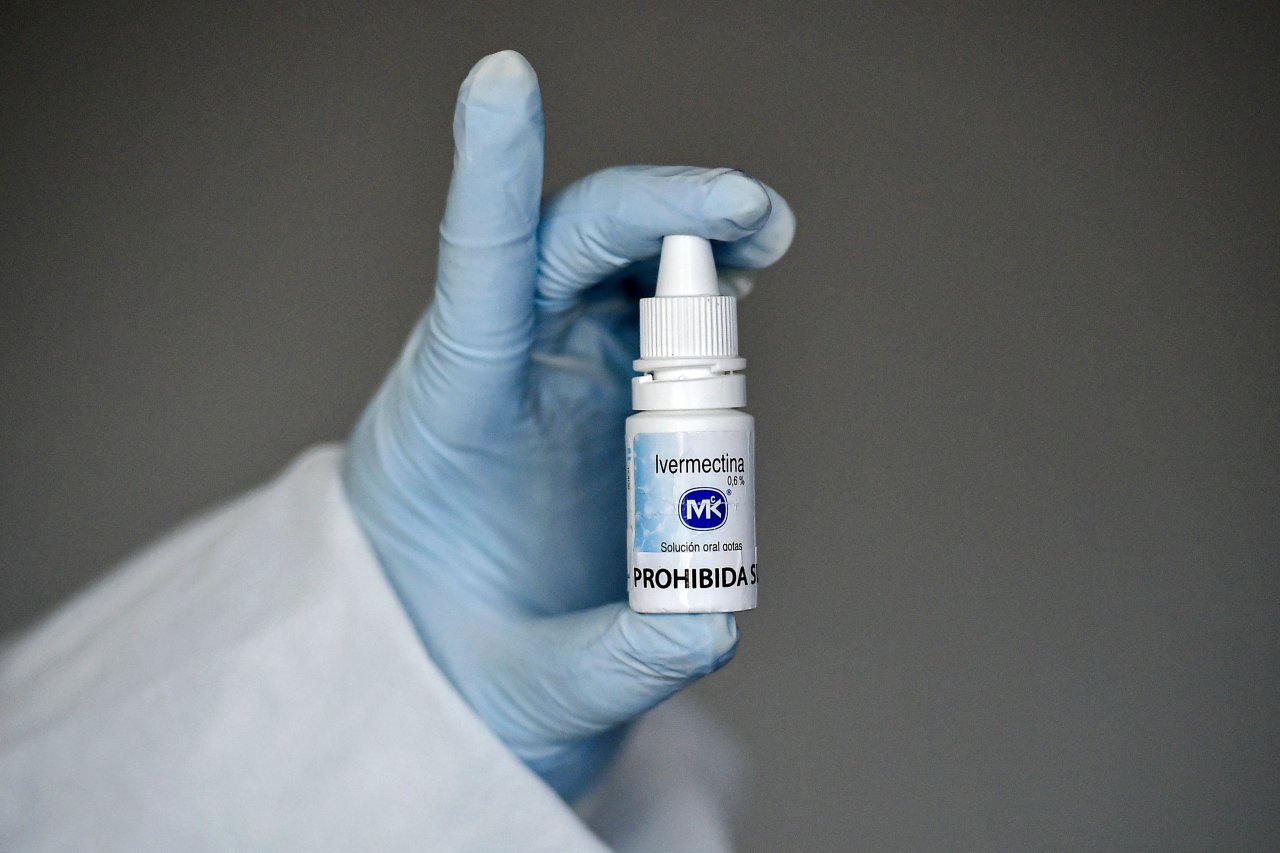
The reluctance of scientists, doctors and regulators to endorse ivermectin as a COVID-19 treatment has inflamed the political right in the U.S. Conservative pundits have called it a “miracle drug,” and even some prominent Republican members of Congress are fuming. The reaction on the political left has been nearly as hyperbolic, with headlines calling it a “bogus COVID treatment” and “a darling of conspiracy-mongers”….Read more
The US is the only nation with ethical standards for AI Weapons. Should we be afraid?
From my cover story in the Sept. 24, 2021, issue of Newsweek
At a time when the U.S. has pulled its troops from Afghanistan and is reluctant to commit them to other conflicts around the world, the ability to attack from a distance with unmanned weapons is becoming a key element of U.S. military strategy. Artificial intelligence, by endowing machines with the ability to make battlefield decisions on their own, makes this strategy viable. Plans are being laid to include AI in a whole arsenal of weaponry, ranging from fighter jets to submarines to missiles, which will be able to strike at terrorists and enemy forces entirely under their own control–humans, optional….Read more
From my cover story in the August 13, 2021, issue of Newsweek
Delta, like most of the other variants, blindsided us, worsening and extending the pandemic. And the outbreak is going to get much worse, warns Michael Osterholm, an epidemiologist who leads the Center for Infectious Disease Research and Policy at the University of Minnesota. “The number of intensive-care beds needed could be higher than any time we’ve seen,” he says. When the damage from Delta starts to subside, what other variants will be lurking just behind it to pull us back down again? The World Health Organization is already keeping an eye on several….Read more
Last year Miranda Lim found that taking care of three young children homebound by the pandemic meant she often had to work late into the evening to stay on top of her job. So she set up a daily alarm—not for waking up, but for heading off to bed at a reasonable hour.
It’s understandable why Lim would be a bit of an alarmist, so to speak, when threatened with a lack of a consistent night’s sleep. A neurologist at the Oregon Health & Science University and a sleep disorders physician at the VA Portland Health Care System, Lim is at the forefront of a global cadre of medical researchers who have in recent years been pinning down the ways in which even moderate sleep deficiencies in middle age strongly link to Alzheimer’s disease and dementia later in life…. Read more [may be paywalled]
From my article on Fortune.com, posted July 29, 2021
Nine years ago a startup that would eventually be called Ripple Labs came onto the fintech scene with a promising plan to provide financial institutions with fast, low-cost clearance of trans-border money transfers. To make it happen, the company set up a network on which transactions sped across the globe in the form of a cryptocurrency called XRP, which was specially created for the task.
But thanks to its eventual popularity outside of that application, XRP has turned out to be a sort of time bomb with a very long fuse for Ripple….Read more
From my cover story in the June 18, 2021, issue of Newsweek
Members of Congress get a lot of calls from people wanting things, most of which receive polite regrets from staffers. But lately one particular call is consistently getting past the gatekeepers: the one from Chris Evans.
Yes, that Chris Evans.
For a year and a half, the 39-year-old megastar (he turns 40 on June 13), best known for playing Captain America in the Marvel movies, has been quietly working the halls of the Capitol, occasionally in person, in an effort to persuade senators and representatives to put aside their hyper-partisan hyperbole and explain, in under two minutes, their views on politics and policy to a new generation of young potential voters….Read more
For too long, we’ve believed the myth that incentives backfire. But there’s nothing wrong with bribing people to get vaccinated.
From my article in The Atlantic, posted May 19, 2021
A stream of grumbling recently turned up in my Twitter feed over incentives that are being offered to encourage Americans to get a COVID-19 vaccine, including money, beer, doughnuts and even weed. The idea that society is better off when people act on “intrinsic” motivation—that is, because they’re inclined to do the right thing—and not on “extrinsic” motivation, such as receiving a cash payment, is widespread. But is there really something inherently wrong with bribing people to do the right thing? And on a practical level, does it work?….Read more